The New Olympus OM-D E-M10

Olympus launched today the new ‘entry-level’ OM-D E-M10, plus a refined version of the very successful OM-D E-M5 to be known as the E-M5 Elite Black, along with a host of new lenses, new Stylus range cameras and exciting accessories.
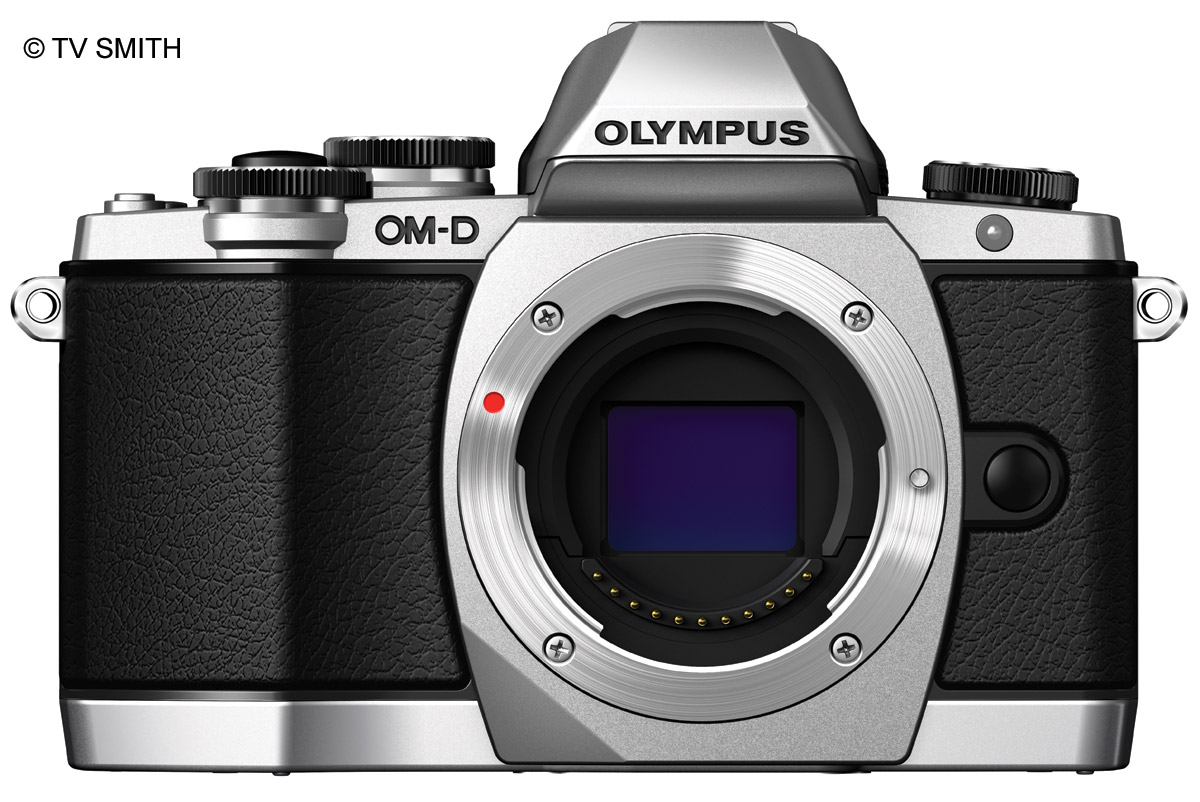
The New Olympus OM-D EM-10

Press Release For OM-D E-M10:

Olympus Imaging Corporation is pleased to announce the OM-D E-M10, scheduled for release in late of February 2014. This mirrorless interchangeable-lens camera conforms to the Micro Four Thirds System standard, and features a luxuriously-textured metal body, equipped with a large electronic viewfinder that has bright and clear visibility and offer the excellent image quality.

The OM-D E-M10 is the Olympus mirrorless interchangeable lens camera OM-D series entry model, with the cutting-edge technology into a compact and lightweight body. The E-M10 inherits the 16 megapixel Live MOS sensor and TruPic VII image processor from the high-range E-M5 and E-M1 models for the excellent image quality, high-resolution, and high-sensitivity. This model features an ultra-slim design with an excellent operability, and a quick response, high-resolution electronic viewfinder for authentic shooting style. This is a “SUPER PREMIUM, COMPACT” high-performance, mirrorless interchangeable-lens camera, with unparalleled design for capturing any moment perfectly that surpasses high-end models.

Main Features:
1. Ultra-slim stylish body that satisfies the desire to hold the camera and shoot.
2. Traditional optical technology and advanced image processing technology that brings out the excellent image quality.
3. Large, bright and clearly visible, quick response electronic viewfinder.
4. 3-axis VCM in-body image stabilization mechanism brings out the very best in every lens.
5. 81-point FAST AF and 8 fps max. high-speed sequential shooting to capture the moment.

The camera will be available in Silver/Black and packaged with different ‘kit lens’, depending on the market.
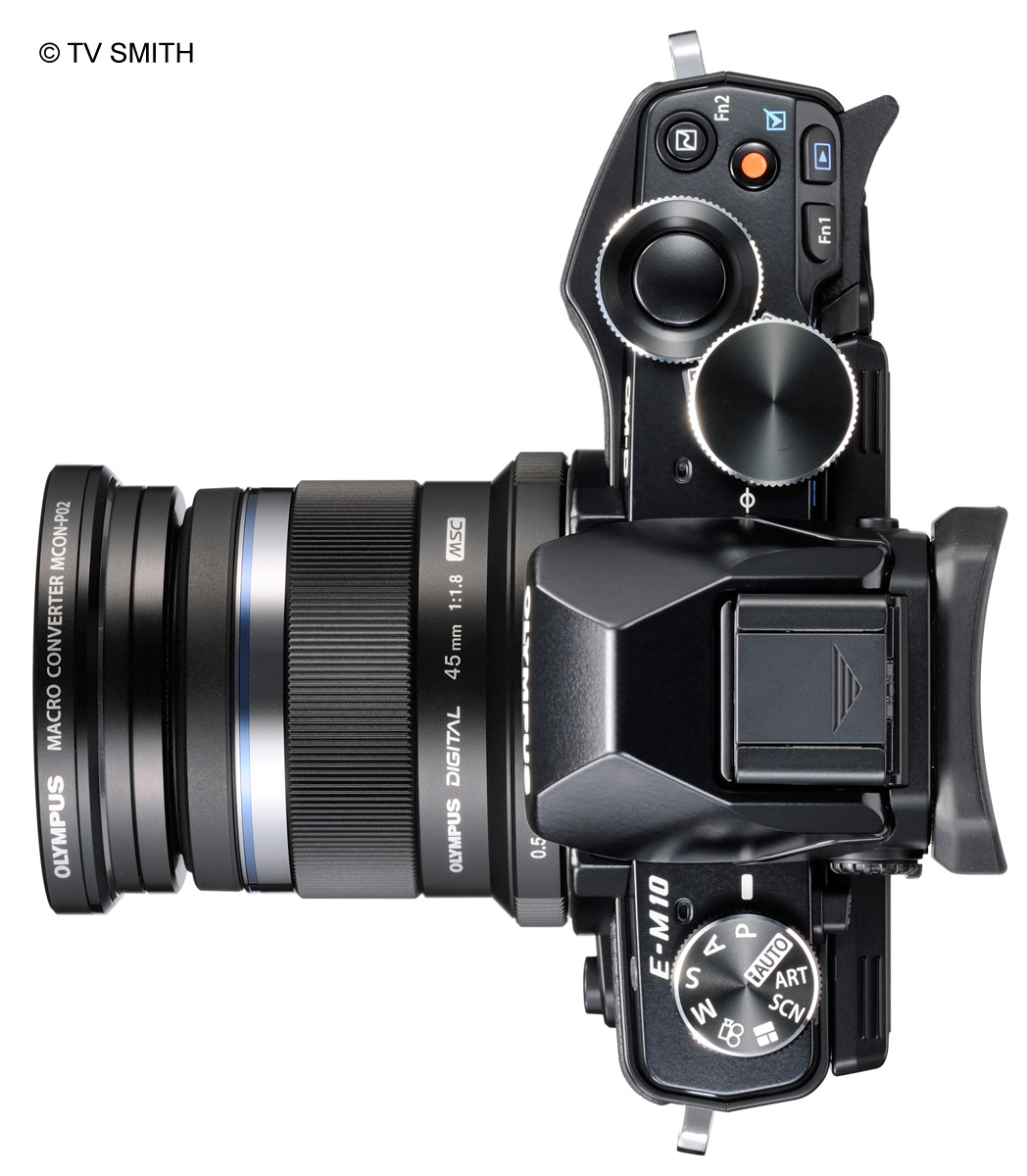
The New Olympus OM-D EM-10 shown here with the 45mm lens and macro convertor

OM-D E-M10 Concept Video:

Press Release For OM-D E-M5 Elite Black Bundle:

Higher image quality with the M.ZUIKO PRO lens and refined body design OM-D E-M5 PRO Lens Kit (Elite Black) Olympus Imaging Corporation is pleased to announce the OM-D E-M5 PRO lens kit (Elite Black) scheduled for release in March 2014, which is combined with the M.ZUIKO DIGITAL ED 12-40mm f2.8 PRO lens released last fall. This product will enhance the black body design and functionality of the popular Mirrorless interchangeable lens camera, OM-D E-M5.

Main Features:
1. A traditional camera feel is portrayed with black leather-tone coating.
2. A leather-like design is also used on the grip for excellent texture.
3. The main dial and sub-dial have been refined for improved design and operability.
4. The new firmware Version 2.0 brings support of ISO LOW (equivalent to 100) and Small AF Target to the camera.
5. Bundled with the M.ZUIKO DIGITAL ED 12-40mm f2.8 PRO, which is highly evaluated by many professional photographers.

Overclocking Your Camera’s Other Processor

Walked around Chinatown this evening to capture the pre-Chinese New Year atmosphere and was fortunate to chance upon a lion dance troupe.

Photography Tip: Normally with street photography, I leave the camera in Program or P mode. The camera’s CPU stores an algorithm that will assess a scene and pick an ideal ISO, shutter and aperture combo. But there are times, I need to override the CPU and utilise a much more powerful external processor: The Brain.

Seeing that the lions were prancing very fast, I switched to Shutter (S) priority and chose a higher shutter speed to freeze the action. Of course, a good shot requires more than control of exposure parameters. To capture more of the blue sky during the golden hour, I knew I must go low. I also must position myself where I can also frame the overhanging lanterns and umbrellas.

All these to be processed by the brain in less than a few seconds or I lose the shot. How do I do it? I start composing the shot in my mind as I move towards the lions. All before I even look through the camera. This saved precious time and freed my mind to click at the decisive moment.

How do you over-clock your brain? When you are without a camera, look at different scenes and imagine how you may want to photograph it. By learning how to quickly and instinctively process what you see, the camera becomes a natural extension of your eyes.

Olympus OM-D, ISO 8000, f4, 1/250 sec.

Chinese New Year Lion Dance At Chinatown KL

Lower Your Electricity Consumption From Lighting, By As Much As Half

I’ve been using LED lighting for professional photography in a studio environment and out on location for several years now. I’ve seen how the technology has improved both in quality and costs.

With this in mind, I am planning to convert all the florescent tubes and energy saving bulbs in my house to the new LED types. This should see a saving of electricity of at least 40 to 50 per percent.

The LED lamps emit almost no heat and will keep the air conditioners running cooler at the same power consumption. LED bulbs also do not emit any light in the non-visible spectrum such as UV and IR. These rays can cause fabrics and other things to fade and notably; cause eye fatigue. Plus; all LEDs are instant-on and will have no buzzing sounds or flicker.

I paid a visit to my favourite electrical store in Pasar Road to see the latest development and to study what’s available locally.

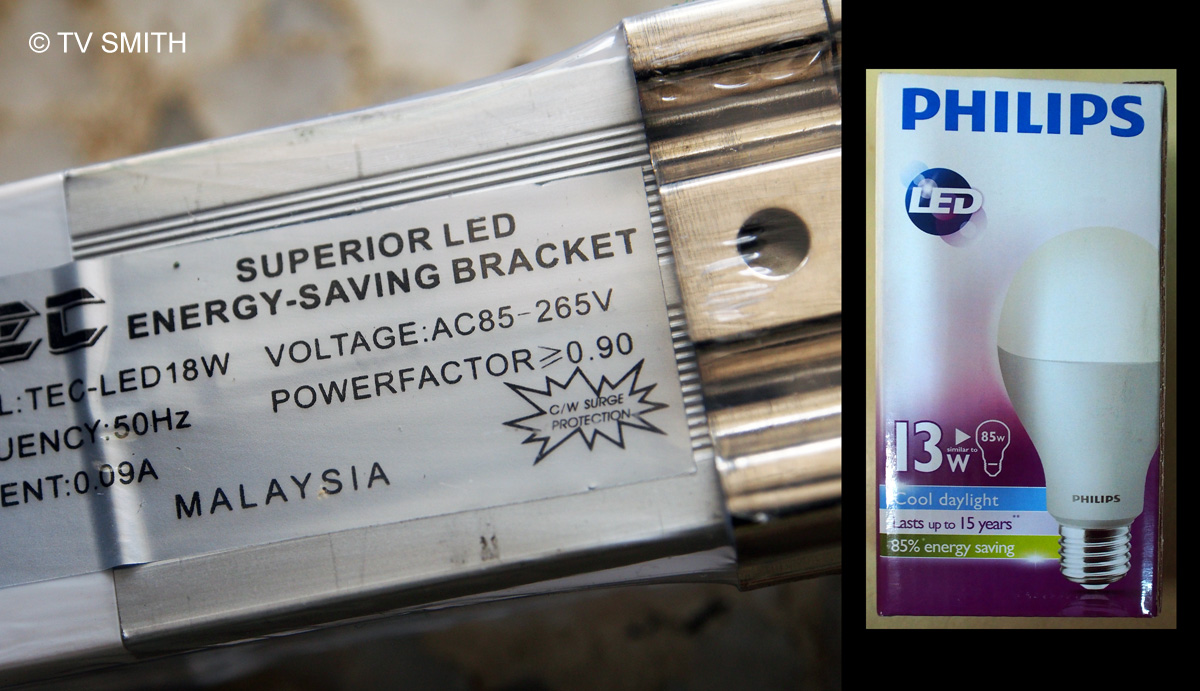
First item I bought was a 18 watt Philips LED bulb (RM40) that is equivalent to a 85 watt or 1055 lumen incandescent lamp in brightness. It is projected to last 15 years. Only disadvantage is; it is not dimmable (for this model). One year ago, such a bulb would have cost over RM100 each.

I would take lifespan rating with a grain of salt as there is no real way to truly test except to run it for 15 years. The newer bulb types came out a few months ago, so testing is by simulation not real-world use.

Second item is a Malaysian assembled TEC LED 4ft lamp (RM48) that comes with its own aluminium fitting. It is rated 18W and replaces the 32 watt 4 feet tubes. It has a claimed lifespan of 10,000 hours. I opted for the daylight colour version. The casing and lamp is so light that you can even use 3M (not just any brand) double-sided tape to hold it. I drilled two holes and used the clips that come with it.

Although it is mounted on the wall at almost ceiling height, one of my cats took it down while leaping to get a lizard. It fell 12 feet onto hard concrete and the tube didn’t shatter. Traditional florescent tubes would have left dangerous mercury-lined glass shards flying everywhere. I plug the whole unit back and it worked without a blink. Surprisingly tough; these plastic LED tubes..

I saw in the shop a 3-channel wireless after-market remote control branded as Tomato (RM40). Wiring it up is a bit complex and you should not do it yourself unless you know what you are doing. After fitting it, I was surprised that I can trigger the kitchen light from a room upstairs. It uses radio waves instead of infra red. I think I may install the remote control for bedroom and living room later for the perfect sedentary lifestyle. Lol.

Next, to try (the shop didn’t have it in stock); is the new generation LED replacement tubes (RM40). Just replace your old fashioned tubesi with the LED tubes. No need to open up the casing to re-wire, or remove the ballast (choke) as before. I think you only need to remove the starter. One year ago, the replacement tube fitting was quite messy and will involve a electrician.

Each year millions of discarded florescent tubes containing toxic mercury gets dumped in landfill. Besides saving on electricity, you are helping the environment a bit. On the other hand, LED light/lamps may contain rare earth phosphor. At least, you don’t need to discard them as often as before.

The thing is: to save money, you have to invest money first. That is what stops most people, understandably. Best strategy is to replace gradually as each of the other type of fluorescent, incandescent or energy-saving bulbs in your house burns out.

Picture of TEC LED tube back casing on left, and Philips LED bulb on right, both lit by the phone’s LED light.

LED Lighting: TEC LED tube and Philips LED bulb