Urban Safari

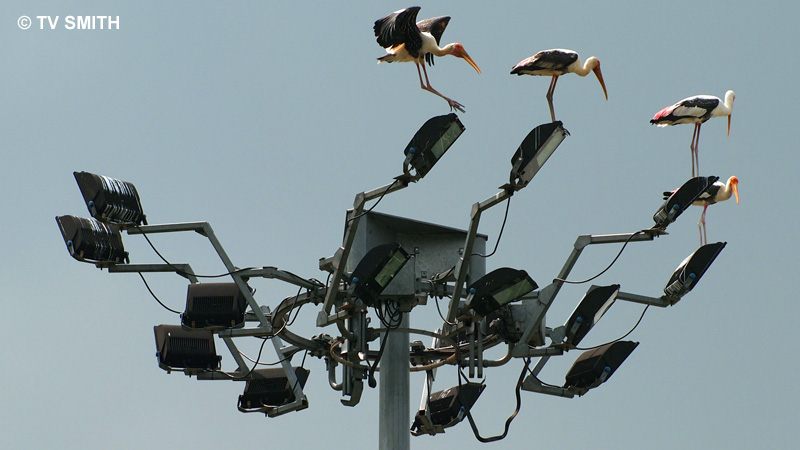
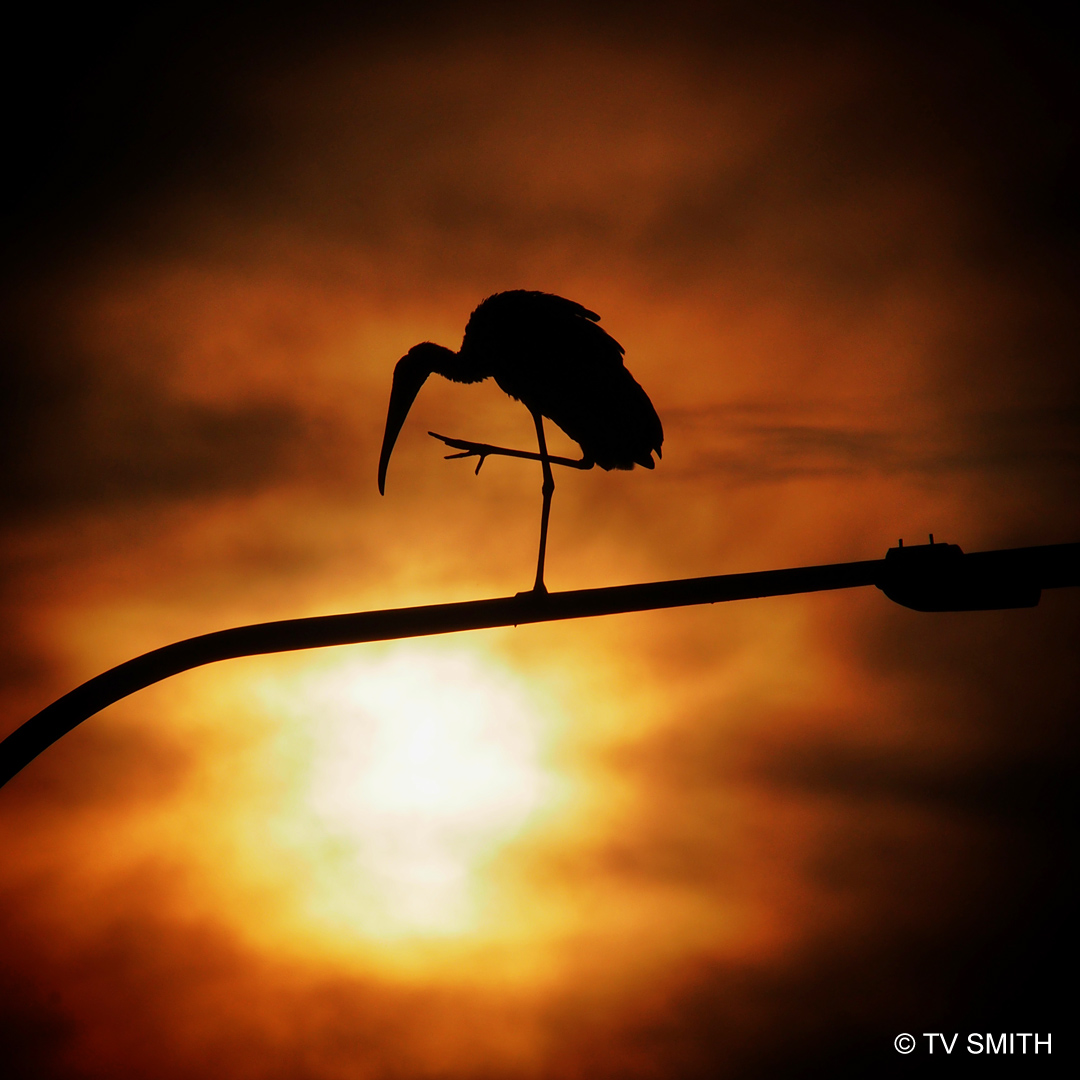
So there I was, dreaming of an African safari earlier today. On the way to the Magnum (lottery) shop in Taman Melawati, I saw this wonderful sight. The setting sun was gorgeous and a huge stork was perched near me. OK. So the lamp post is not your typical canopy tree and the ground below isn’t exactly grassy African Savanna. There are no charging rhinos but plenty of crazy, charging vehicles instead. In fact, I was photographing from one of the busiest and nosiest roads in the Klang Valley. The Middle Ring Road 2.

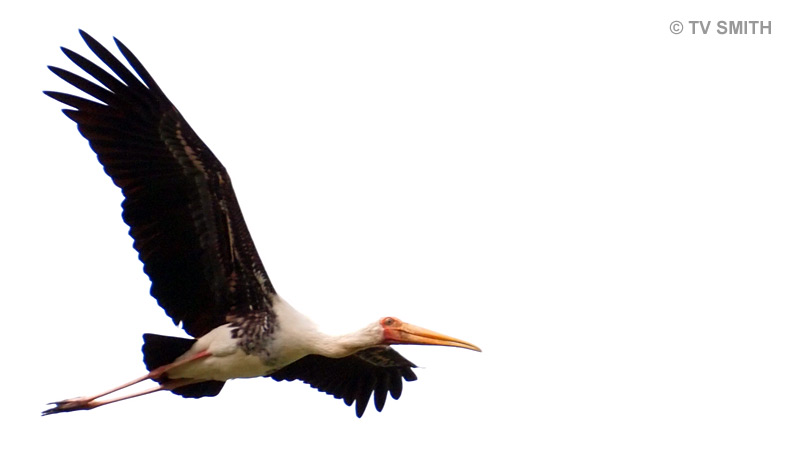
The fascinating colony of Painted Storks are free-flying inhabitants of nearby Zoo Negara. They hang around mostly in the Taman Melawati and Ulu Klang area. I have been following them for years and have seen them as far as the Wetlands of Putrajaya, Sepang and Kapar. They make day trips and return to roost in the evenings.

It will be both an awasome and bizzare sight for anyone seeing them for the first time. The average stork stands at about 3 to 4 feet tall, when not hunched. Their wingspan is at least 5 to 6 feet during flight.  We are lucky to have these magnificent birds in the city. Besides, it is much cheaper photographing wildlife this way 🙂
Urban Safari

Stalking Storks

You’ve been told babies are brought in by storks. But where do storks come from? They come from Zoo Negara, apparently 🙂

The Painted Stork (Mycteria Leucocephala) you see perched above tall structures all over the Klang Valley were originally from India and Sri Lanka. Part of a captive breeding programme at Zoo Negara, the birds were subsequently released and became free-flying residents of the zoo.

In the mornings, they set off in various directions but return to roost in the evenings. Over the years, I have seen small colonies as far away as Putrajaya and above the Bird Park at the Lake Gardens.

Olympus E-PL2, ISO 1000, f5.6, 1/2000 sec

Olympus E-PL2, ISO 1000, f5.6, 1/2000 sec

Road To Putrajaya. My fascination with these beautiful birds started when I spotted one flying alongside my car on the elevated sections of MRR2, about a decade ago. Since then, I have been observing them in flight and there is something peculiar. They often use highways as part of their flight path instead of flying line-of-sight.

Olympus E-PL2, ISO 200, f7.1, 1/1000 sec

Olympus E-PL2, ISO 200, f7.1, 1/1000 sec

Morning Clock-In. On the Duke, near the Air Panas Toll Plaza, several flocks can be seen perched on the giant light fixtures. It is easier to get a shot of a stork landing than taking-off as they can stay perched at one spot for hours.

Olympus E-PL2, ISO 1600, f6.7, 1/2000 sec

Olympus E-PL2, ISO 1600, f6.7, 1/2000 sec

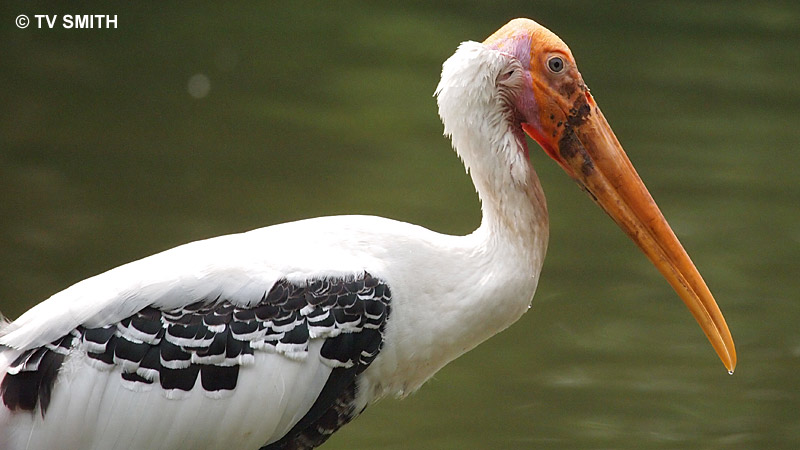
Up-Close. If they are not lazing on lamp posts, they can be seen wading and foraging in shallow waters. At Zoo Negara, they have a lake and a little island to themselves.

Olympus E-PL2, ISO 640, f6.4, 1/2000 sec

Olympus E-PL2, ISO 640, f6.4, 1/2000 sec

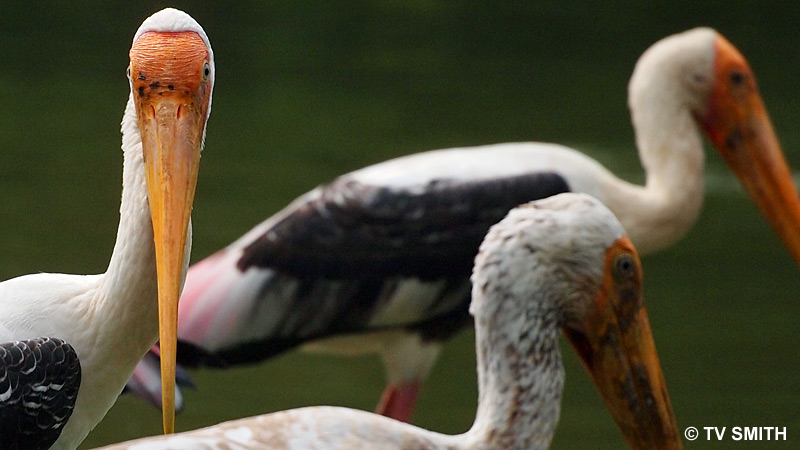
Birds Of A Feather. The Painted Stork gets its name from the distinctive pink feathers on its back.

Olympus E-PL2, ISO 200, f8, 1/320 sec

Olympus E-PL2, ISO 200, f8, 1/320 sec

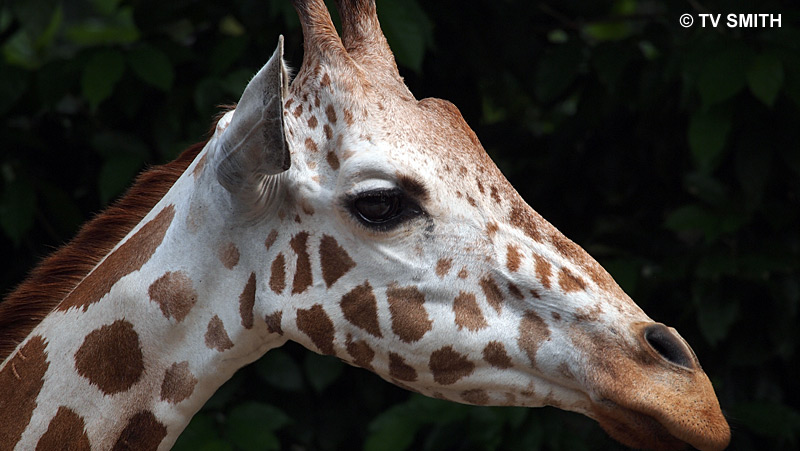
Nosy Neighbour. At the National Zoo, the giraffes are the storks’ next door neighbours. If you need a super sharp and long-reaching telephoto lens, I highly recommend the Olympus M.Zuiko ED 75-300mm (150 to 600mm equivalent ) zoom. All pictures here are photographed with this compact and feather-weight lens.

See also:
The Art Of Art Filters | Layang Layang | The Bird Park | Driving An Ultra-Wide

Tip: You can view larger versions of the images here, gallery-style. When the page finishes loading, click on any picture. Navigate via the arrows on each side of the frame.