Batu Arang

Batu Arang was once a bustling coal mining town that rivalled Newcastle. Apart from feeding steam locomotives of its era, the plentiful coal meant fuel for a brick kiln. That too has closed and what remains today is a chimney and ruins overgrown by the jungle.

Around the sleepy hollow, there are some tell-tale signs of its glorious past. Many wooden houses in the surrounding villages spot an unusual patchwork of red bricks. It was as if there was one final warehouse sale of bricks and every resident grabbed some.

This kid running for her school bus provided a little visual counterpoint to the sedentary landscape.

Olympus OM-D, ISO 200, f9, 1/400 sec.

Batu Arang

La Tuk Kong

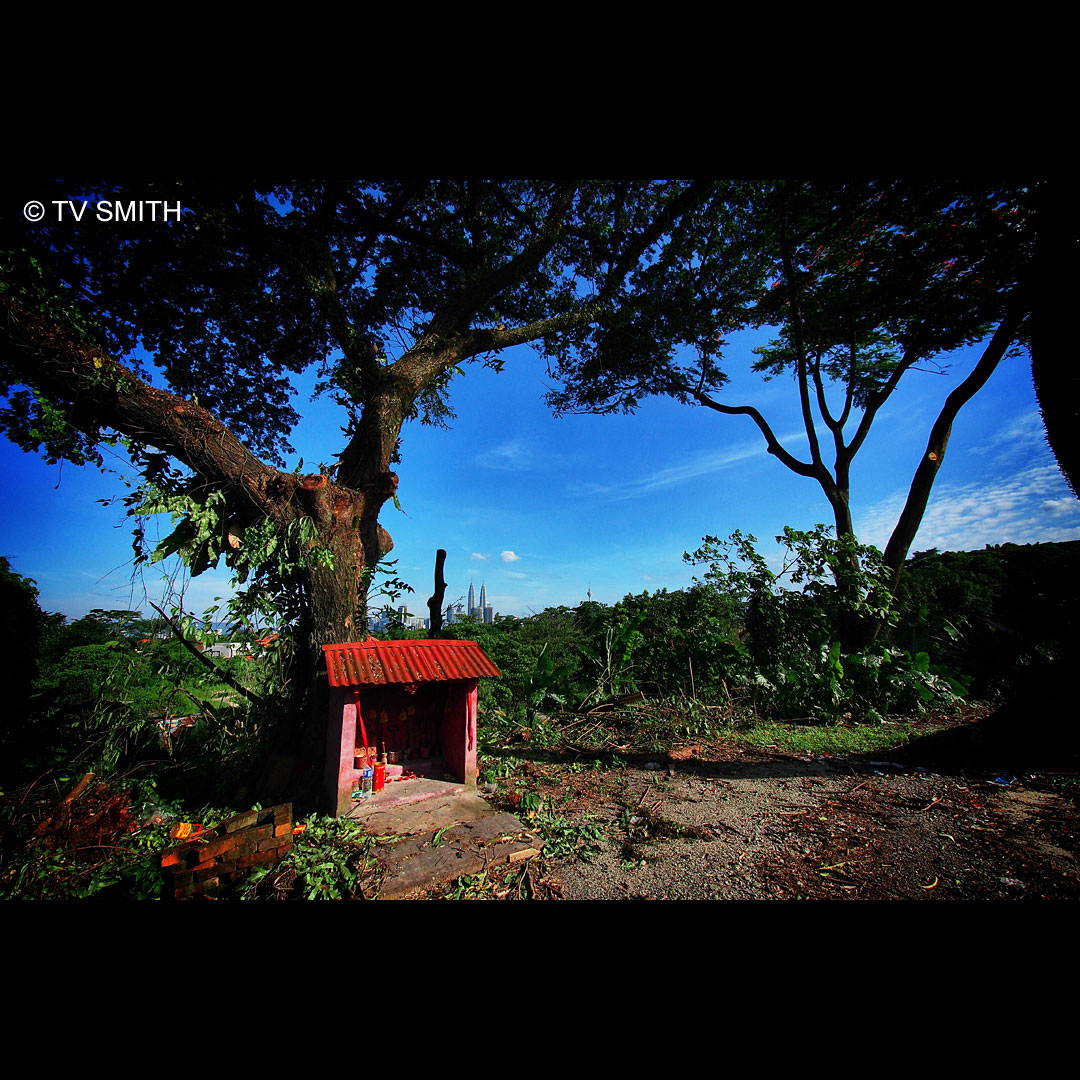
In Malaysia and Singapore, you will often see a little red shrine under a tree or next to a big rock. The La Tuk Kong (in Hokkien) or Na Tok Kung (in Cantonese) is a Malaysian deity with a unique Malay-Chinese name. La Tuk is datuk or grandfather in Malay and kong is diety in Chinese. Believers consider it to be the spiritual protector of the area it reigns. The deity has its roots in a bizarre mixture of Taoist elements, traditional spiritual healers (bomoh) practices and superstitions.

Worshippers light incense sticks, candles and bring fruits as offerings. La Tuk is a heavy smoker as he is often appeased with tembakau jawa, rokok daun and kemanyan (aromatic benzoin). Often, the motive is to ask for a lucky number to bet at the lottery shop. If the devotee is lucky, the La Tuk Kong’s humble abode gets a makeover with concrete and metal gates. Superstitious construction workers will often clear everything on site but leave the shrine alone as a peace gesture or for fear of retribution.

Olympus OM-D, ISO 200, f8, 1/1250 sec.

La Tuk Kong