Driving An Ultra-Wide

The Ultra-Wide-Angle Lens (UWA) is the most misunderstood lens. Like an exotic sports car, it is not only expensive but harder to steer under inexperienced hands. Most beginners and even seasoned users think the UWA is for getting everything in. In practice, the opposite is better. The less you take in, the less cluttered is the picture.

If you normally have problems leveling the horizon, you will find the ultrawide tougher to level with its distortion of parallel and perpendicular lines. Outdoors, the metering may also underexpose since the lens gets so much sky in.

Now imagine you are at Tahrir Square at the height of the Egyptian protests. A man next to you suddenly fires an automatic weapon into the air. The bullet casings are emptied in  your direction, as you crouch quickly. If you are not busy emptying your bladder, your ultrawide lens should help you capture a very dramatic view since you are closest. That’s right, and it may sound rather ironic. To use an ultrawide effectively, you must be willing (or able) to move close to the subject.

The UWA lens exaggerates perspective, the sense of scale and perceived distance of the
various elements in your picture. As such, even more thought should be given to the composition, putting those special characteristics of the lens to your advantage.

The following pictures are photographed with the new Olympus Pen E-PL2 camera paired with the superb Panasonic Lumix 7-14mm UWA lens (14mm to 28mm in the old economy). It is currently the widest native zoom lens in the Micro Four Thirds family.

Olympus E-PL2, ISO 250, f16, 1/180 sec with fill flash

Olympus E-PL2, ISO 250, f16, 1/180 sec with fill flash

Angel & Angler. I was about to climb down to the shore of the lake in Batu Dam to photograph an angler. Then, an angelic Iranian bride waltz in with billowing veil, Bollywood style. I didn’t know Ulu Yam, like Putrajaya, is now attracting wedding-photography tourism :). You can see the rain creeping in behind and I used the built-in flash of the camera for fill on the face. The ultra wide works even better when there is movement in the scene.
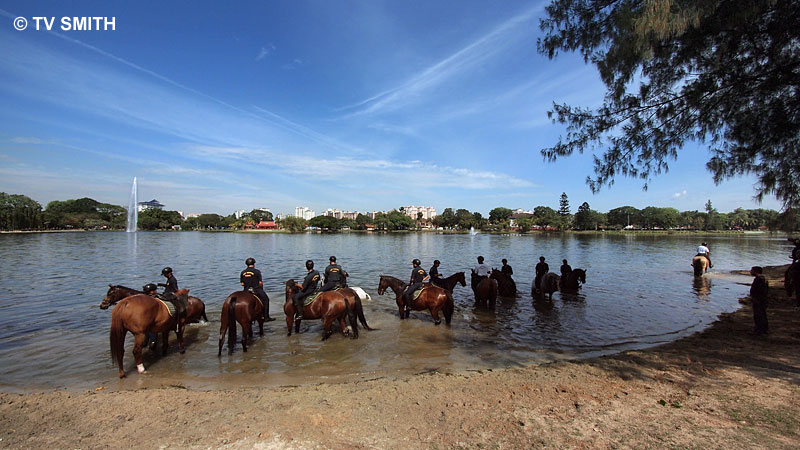
Olympus E-PL2, ISO 200, f4.5, 1/4000 sec

Olympus E-PL2, ISO 200, f4.5, 1/4000 sec

Horsing Around. I stumbled upon this group of DBKL mounted-troopers giving their horses a morning treat at Titiwangsa Lake. The ultrawide may be useful if you need to get a large group in, in a hurry. For landscapes, it may not be as good as everything in the horizon becomes too distant and small.
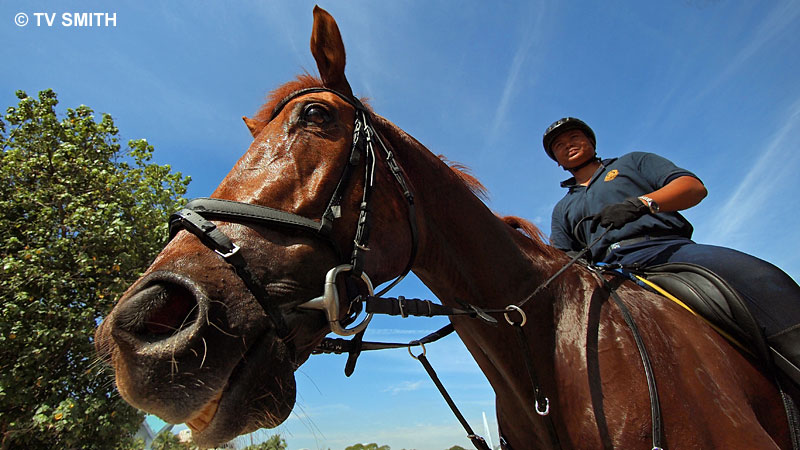
Olympus E-PL2, ISO 200, f4, 1/2000 sec

Olympus E-PL2, ISO 200, f4, 1/2000 sec

Getting Serious. Get your feet wet, move close and put the ultra-wide to where it belongs. Unlike a girlfriend, a horse does not complain when his head appears bigger than it actually is, up-close. The adult film industry exploits this characteristic of the wide angle lens quite cleverly ;).
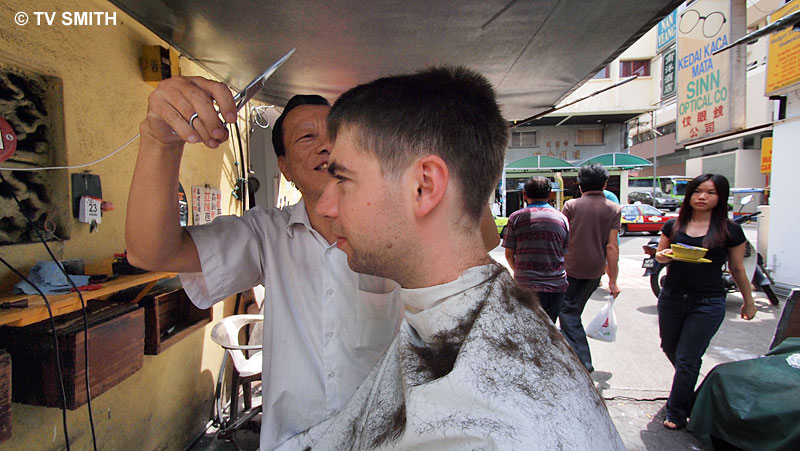
Olympus E-PL2, ISO 200 f5.6, 1/160 sec

Olympus E-PL2, ISO 200 f5.6, 1/160 sec

Backlane Barber. I wouldn’t normally recommend an ultra-wide lens for street photography, but here it helps show the barber’s locale in a busy side-lane. According to his friend, this barber is ‘world famous’ and normally charges USD 5 before he allows anyone to photograph him in action. Must be my lucky day as he was in a good mood and didn’t charge. The customer is a German backpacker.
Olympus E-PL2, ISO 200, f11, 1/1000 sec

Olympus E-PL2, ISO 200, f11, 1/1000 sec

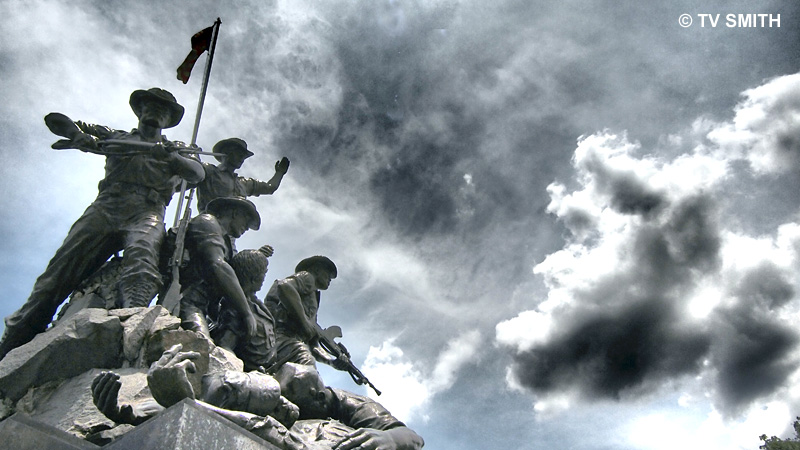
National Monument. The Olympus in-camera Dramatic Tone Art Filter works very well with an ultrawide. Maybe is just me but I keep seeing a shaggy white dog in the sky :).
Olympus E-PL2, ISO 200, f10, 1/500 sec

Olympus E-PL2, ISO 200, f10, 1/500 sec

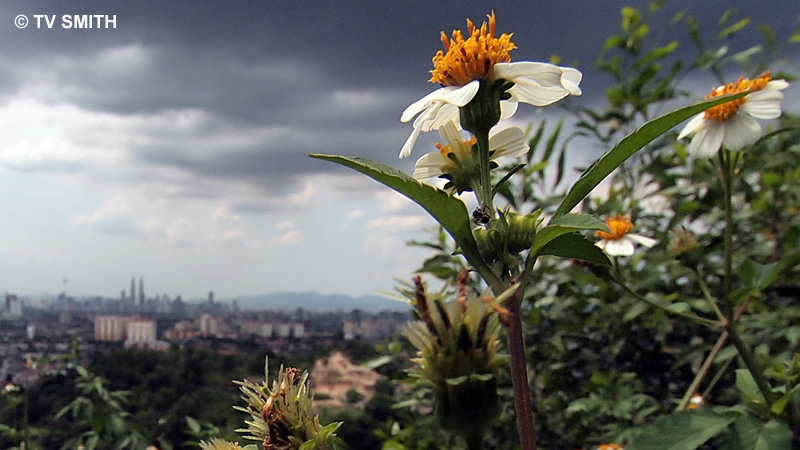
Wild Flowers on the Balcony. The Panasonic Lumix 7-14mm UWA lens is extremely sharp. This is a 100% crop! Contrary to what you may have read, the depth-of-field is not limitless with a UWA, especially up-close. Focusing is even more critical at this range.

See also:
The Art Of Art Filters | The 1-Minute Food Pic | The Bird Park

Tip: You can view larger versions of the images here, gallery-style. When the page finishes loading, click on any picture. Navigate via the arrows on each side of the frame.
The 1-Minute Food Pic

Take 1 Olympus Pen E-PL2 Camera
Add 1 unit of FL-36R Flash
Garnish with 1 softbox attachment
Fire the shutter
Serve hot on your Blog or Facebook.

Are you a food blogger or foodie? Or you simply have this compulsion to post everything you eat on Facebook? With a little effort you can improve your food pictures and even make your readers salivate.

I will show you how to get better pics without having to set up a studio on site. In the studio, a food photographer will typically use three strobe lights and an assortment of light shapers, reflectors and diffusers. The studio flash equipment is  equipped with ‘modelling’ lights that allow visual estimation of light ratio before committing the pixels.

There will also be a professional food stylist present. He or she will dress up the dish to make it look more appetizing and beautiful. Artificial steam, fake ice cubes, some oil to  make surfaces glisten, a little colouring and sprayed-on water droplets are routinely deployed. As a result, the food is usually inedible after that.

As a food blogger checking out a restaurant, you make do with a point-and-shoot camera and the on-board flash. You don’t want to scare the other customers or annoy your dining partner. So what can you do if you want a nice picture but do not want to mess with the food you are going to eat and pay for?

Food jumps out when it is lit by directional light. Enter the Olympus Wireless Flash System. Few Olympus E-PL2 users realise they have a very powerful and professional feature built into their compact camera. Pair it with the optional FL-36R (or FL-50R) and you can create magic with it. Since the camera communicates with the external flash wirelessly, you can place the flash at any angle or position to simulate directional window light. Accurate TTL (Through-The-Lens) flash metering and exposure is retained throughout, with the flash off camera.

The Olympus Pen E-PL2 can remotely control up to 9 external flash units in 3 groups. The power ratio and other settings for each group can be conveniently adjusted from the camera itself. For the food shots shown here, I used a single FL-36R flash with a mini softbox attached. The challenge to myself was two-fold. To get a decent picture within one minute of the dish arriving. AND, to obtain a useable ‘out-of-camera’ jpg without any further tweaking. In this respect, the combo (of E-PL2 & FL-36R) passed with flying colours (pun intended) and is truly a studio in a pocket (or handbag). Bon Appétit !

Olympus E-PL2, ISO 200, f5.2, 1/60 sec with Olympus FL36R Wireless Flash

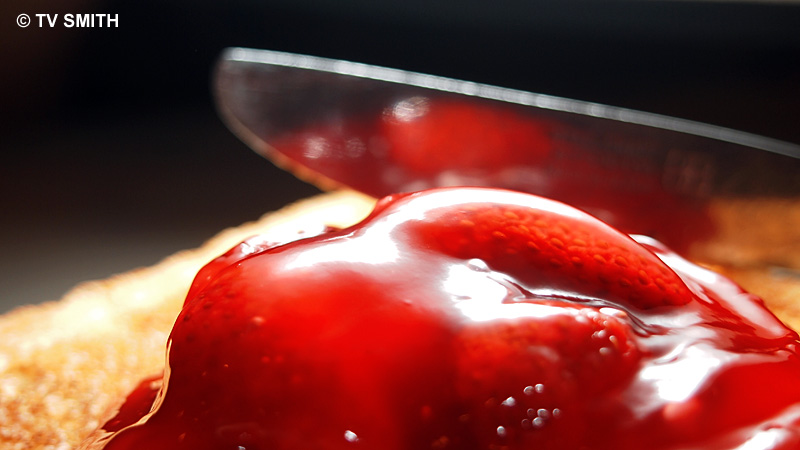
Strawberry Puree On Thick Toast - Olympus E-PL2, ISO 200, f5.2, 1/60 sec with FL-36R Flash

3am at my favourite Old Town White Coffee outlet in Rampai Business Park. Since the flash sensor is concealed by the softbox, I needed another way to open up an optical path to the slave unit. Normally, it will work by bouncing the on-board flash which sends a digital pulse. I bet you didn’t know the pop-up flash can bounce :). But the walls and ceilings at this restaurant are painted dark brown and will not reflect. So how? Easy. I positioned a couple of white paper strips near the flash to channel the IR signal.

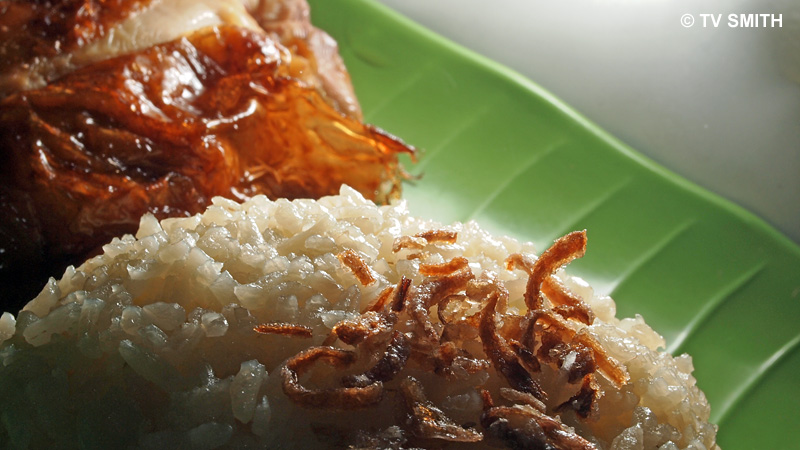
Studio 5 Chicken Rice - Olympus E-PL2, ISO 200, f5.2, 1/60 sec with FL-36R Flash

Studio 5 Chicken Rice - Olympus E-PL2, ISO 200, f22, 1/60 sec with FL-36R Flash

Studio 5 Restaurant at Ampang Jaya belongs to my friend Paul and so I had to warn him not to make anything special or better looking than it actually is. To their credit, the chicken rice actually looks as good as it tastes. I carefully positioned the flash to highlight the fluffiness of the rice and to ‘rim’ the edge of the banana leaf plate. The grey background is actually the white cloth on the diffuser. The aperture was pushed to f22 to maximise depth-of-field and the quality held!

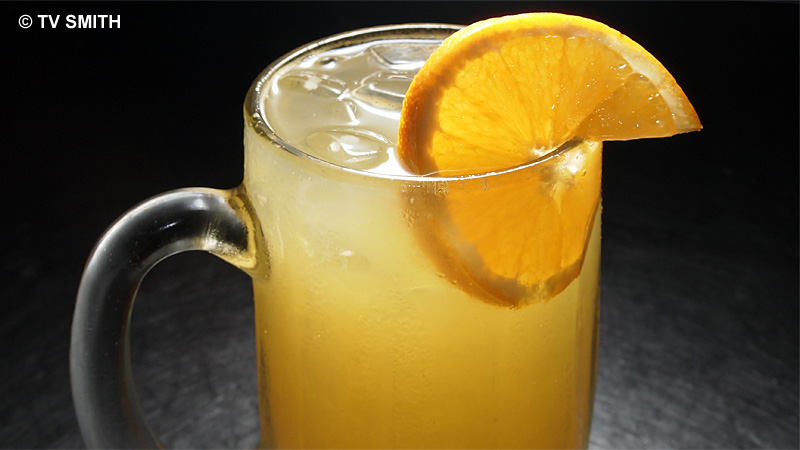
Orange Juice - Olympus E-PL2, ISO 200, f9, 1/60 sec with FL-36R Flash

Orange Juice - Olympus E-PL2, ISO 200, f9, 1/60 sec with FL-36R Flash

I was at first doubtful of the plastic mug and scratchy stainless steel table surface at Studio 5. Turned out better than expected. The flash was held diagonally overhead and I used a piece of white A4 paper below the camera to bounce some light back to the front.

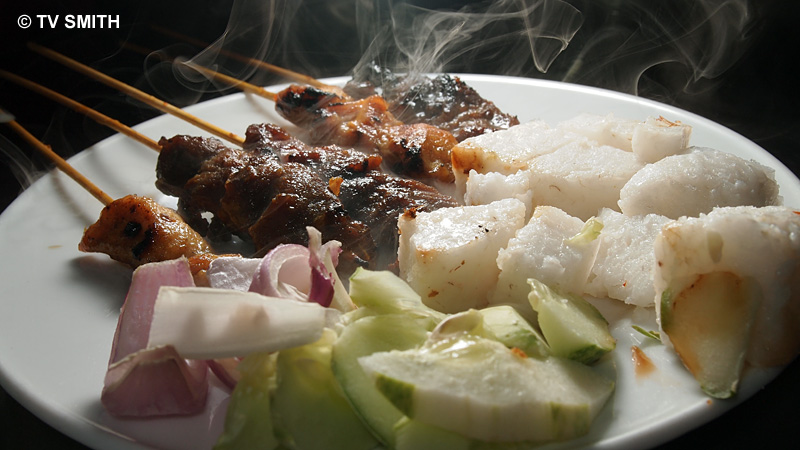
Studio 5 Satay - Olympus E-PL2, ISO 200, f9, 1/60 sec with FL-36R Flash

Hot Satay - Olympus E-PL2, ISO 200, f9, 1/60 sec with FL-36R Flash

This is the only shot where I needed to dress the food a bit. Having ordered the satay by phone hours earlier, it looked stale and dry when I got there. I feathered the meat with some salad oil and got Paul to puff some cigarette smoke into a drinking straw hidden below the cucumber and onion slices. This is a common trick in food photography 🙂

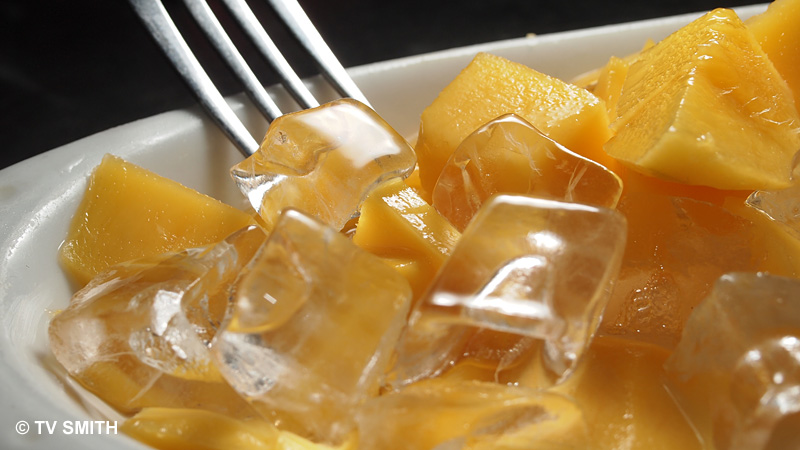
Mango On Ice - Olympus E-PL2, ISO 200, f9, 1/60 sec with FL-36R Flash

Mango On Ice - Olympus E-PL2, ISO 200, f9, 1/60 sec with FL-36R Flash

Complimentary dessert from the boss. Since ice melts almost immediately, I took this shot the moment it landed on the table. After some practice, you will know how even fake silver cutlery reacts to diffused white light beautifully, if you angle it correctly.

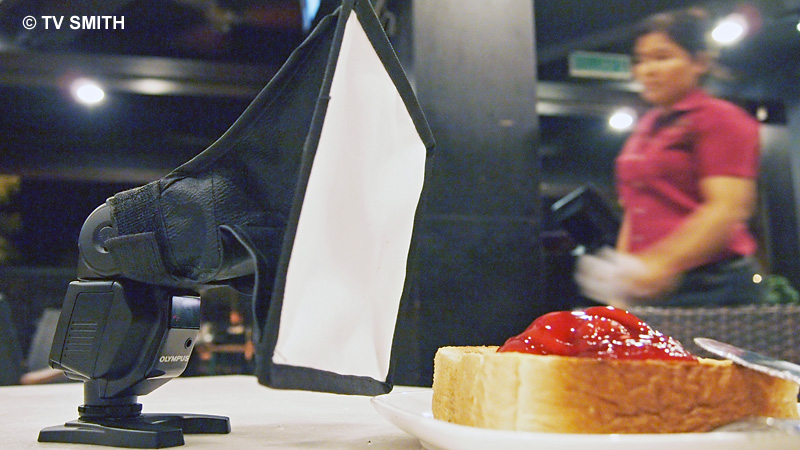
The Set-Up - Olympus E-PL2, ISO 1600, f3.5, 1/25 sec

Look Mum, No Wires! - Olympus E-PL2, ISO 1600, f3.5, 1/25 sec

This is my simple set-up for all the pictures shown here. The mini softbox attachment on the flash can be folded flat for easy storage. All pictures here captured with the Olympus E-PL2, the standard 14-42mm kit lens and the FL-36R wireless flash.

See also:
The Art Of Art Filters | Chinatown Temple with E-PL 2 | The Bird Park

Tip: You can view larger versions of the images here, gallery-style. When the page finishes loading, click on any picture. Navigate via the arrows on each side of the frame.
The Bird Park

I took the Olympus E-PL2 and a tele lens for a workout at the KL Bird Park yesterday. The M.Zuiko 75-300mm lens is equivalent to a 150mm to 600 mm lens in old money. At f4.8 to f6.7, it may not be very fast but this zoom lens is so small and light. It made my romp around the park more enjoyable.

The weather went from hazy to sunny to rainy, all within a short span. Even under adverse lighting conditions, the AF was surprisingly snappy and accurate, requiring little manual intervention.

The only caveat is that the optional VF-2 electronic viewfinder becomes a necessity. Otherwise, it is near impossible to compose and keep steady by looking at the LCD screen alone. Every curious stranger who wanted to peep through the hotshoe-mounted viewfinder was blown away by its amazing clarity. It is a very expensive accessory, though.

Olympus E-PL2, ISO 1600, f6, 1/640 sec, M.Zuiko 75-300mm lens at 187mm

Olympus E-PL2, ISO 1600, f6, 1/640 sec, M.Zuiko 75-300mm lens at 187mm

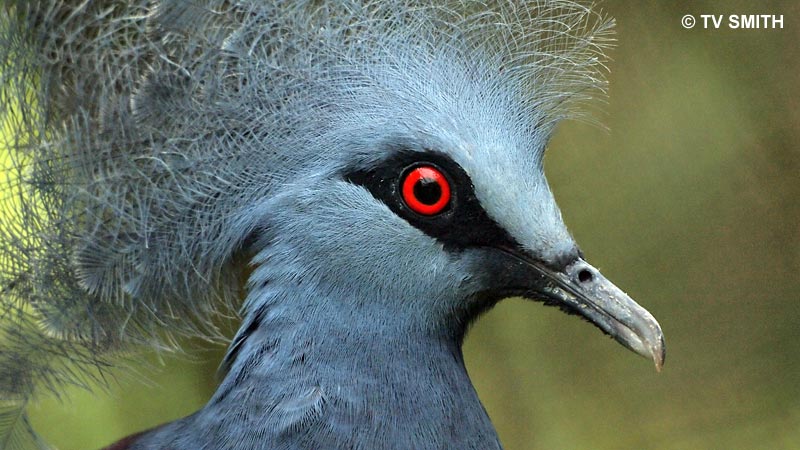
The Victoria Crowned Pigeon is the largest (surviving) pigeon and is very photogenic with its beautiful crest and plume. The ones at the Bird Park are quite tolerant of cameras.

Olympus E-PL2, ISO 640, f5.6, 1/640 sec, M.Zuiko 75-300mm lens at 132mm

Olympus E-PL2, ISO 640, f5.6, 1/640 sec, M.Zuiko 75-300mm lens at 132mm

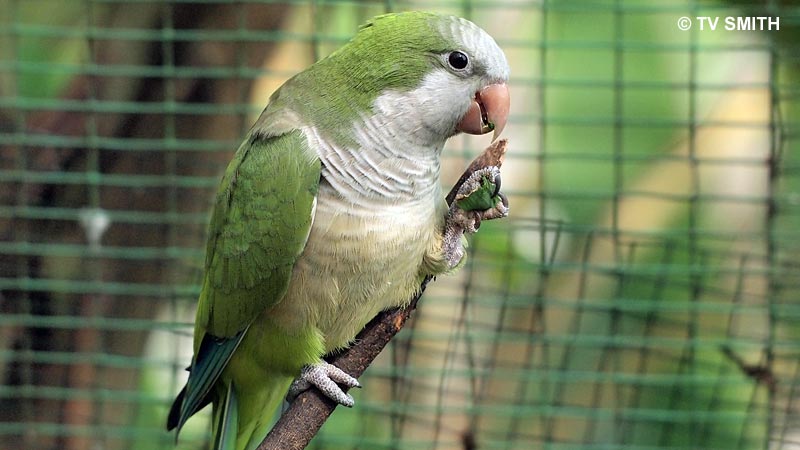
The Cockatiels, Conures, Parrots and Parakeets are the first batch of birds to greet you when you walk into the world’s largest free-flight walk-in aviary. Unfortunately, the colourful Sun Conures are now caged-in. There are also a lot of netting in the background that is hard to avoid in this area.

Olympus E-PL2, ISO 200, f5, 1/640 sec, M.Zuiko 75-300mm lens at 75mm

Olympus E-PL2, ISO 200, f5, 1/640 sec, M.Zuiko 75-300mm lens at 75mm

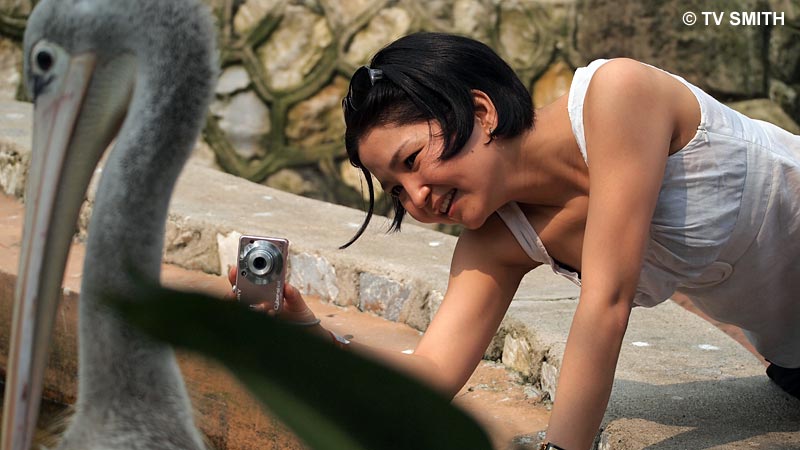
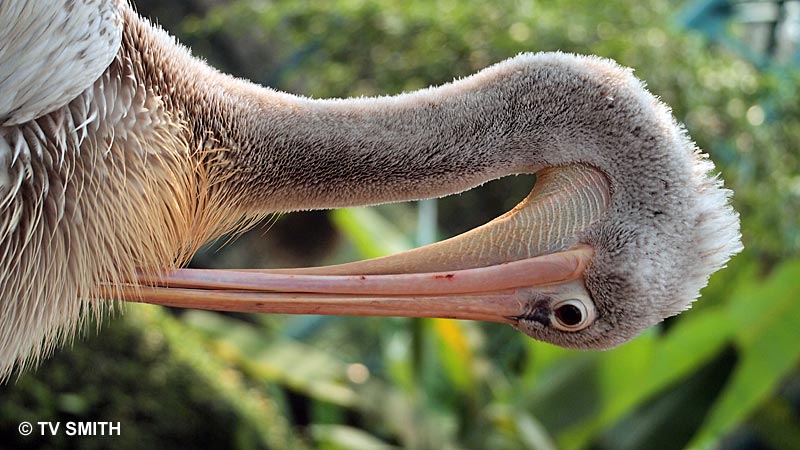
This giant Pelican is a favourite with visitors. The diminutive 75-300mm lens also makes a great candid and portraiture lens at its shortest end.

Olympus E-PL2, ISO 640, f7.1, 1/1000 sec, M.Zuiko 75-300mm lens at 300mm

Olympus E-PL2, ISO 640, f7.1, 1/1000 sec, M.Zuiko 75-300mm lens at 300mm

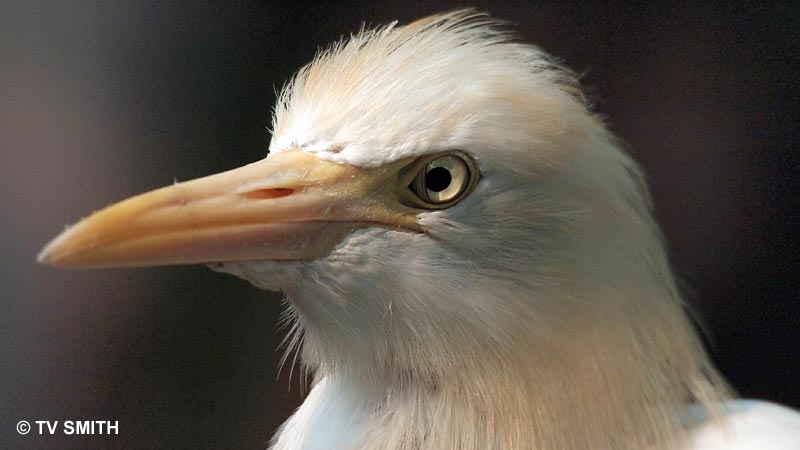
At the long end, the plane of focus is extremely narrow and tricky. The Auto-Focus nailed it when it locked onto this bird’s eye. It took a few attempts as the bird would turn back and forth, in rapid succession.

Olympus E-PL2, ISO 1000, f5, 1/640 sec, M.Zuiko 75-300mm lens at 75mm

Olympus E-PL2, ISO 1000, f5, 1/640 sec, M.Zuiko 75-300mm lens at 75mm

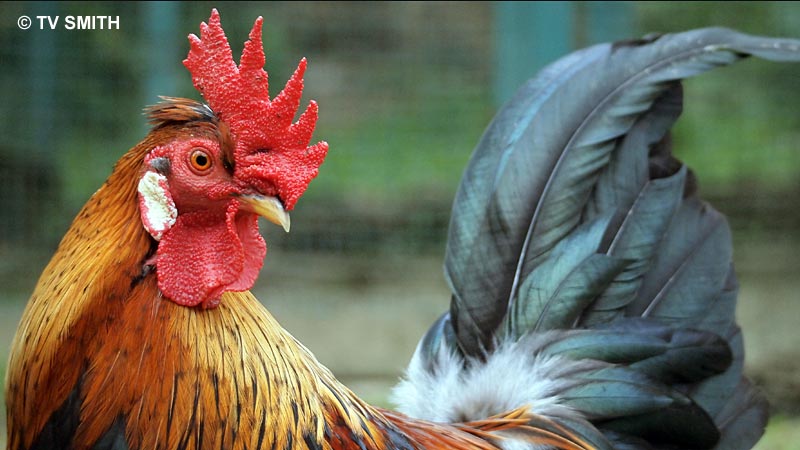
No. This is not your regular Kampung Kok Kok Kai. It is the majestic Red Jungle Fowl.

Olympus E-PL2, ISO 250, f4.8, 1/640 sec, M.Zuiko 75-300mm lens at 75mm

Olympus E-PL2, ISO 250, f4.8, 1/640 sec, M.Zuiko 75-300mm lens at 75mm

Contortionist Bird. Since I always shoot at the wide 16:9 ratio, how can I resist this guy? The E-PL2 metering (and sensor) handled the scene with decent enough latitude.

Olympus E-PL2, ISO 400, f5, 1/800 sec, M.Zuiko 75-300mm lens at 75mm

Olympus E-PL2, ISO 400, f5, 1/800 sec, M.Zuiko 75-300mm lens at 75mm

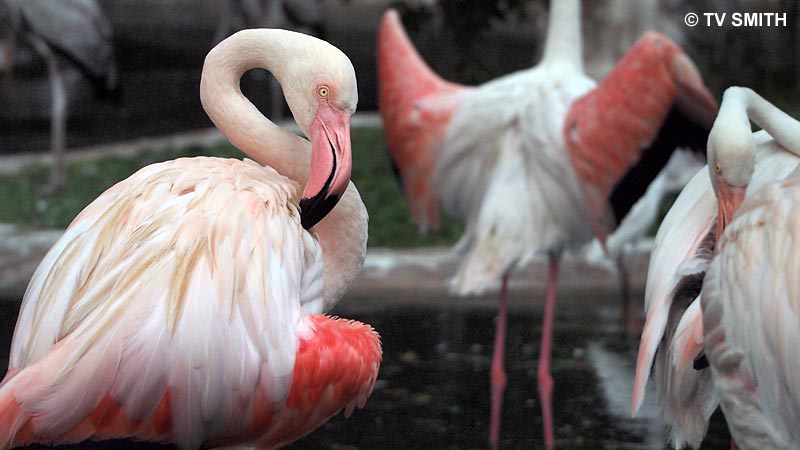
Pretty In Pink. The colony of Flamingos turned out to be a little difficult to photograph. They were flapping, turning and twisting randomly, almost non-stop.

Olympus E-PL2, ISO 800, f4.8, 1/180 sec, M.Zuiko 75-300mm lens at 75mm

Olympus E-PL2, ISO 800, f4.8, 1/180 sec, M.Zuiko 75-300mm lens at 75mm

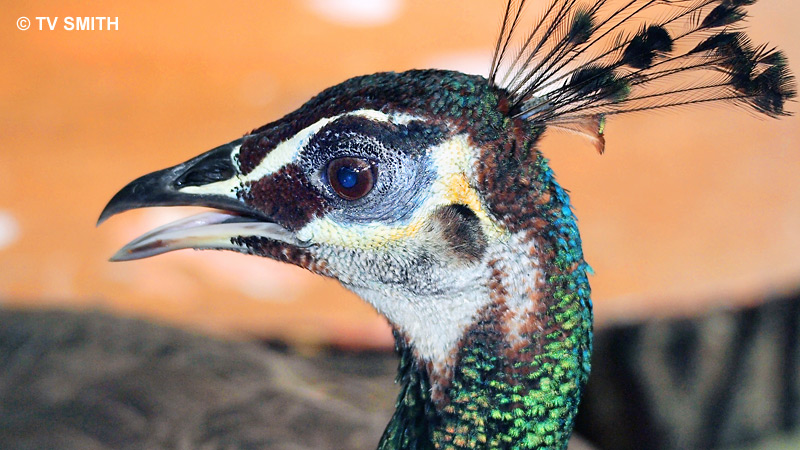
When the going gets dark, the flash gets going. The sun was setting and the light level was getting too low. I just popped (up) the flash and use it as fill light. Works pretty well on this colourful Indian Blue Peafowl.

Olympus E-PL2, ISO 1000, f3.6, 1/500 sec, M.Zuiko 14-42mm lens at 15mm

Olympus E-PL2, ISO 1000, f3.6, 1/500 sec, M.Zuiko 14-42mm kit lens at 15mm

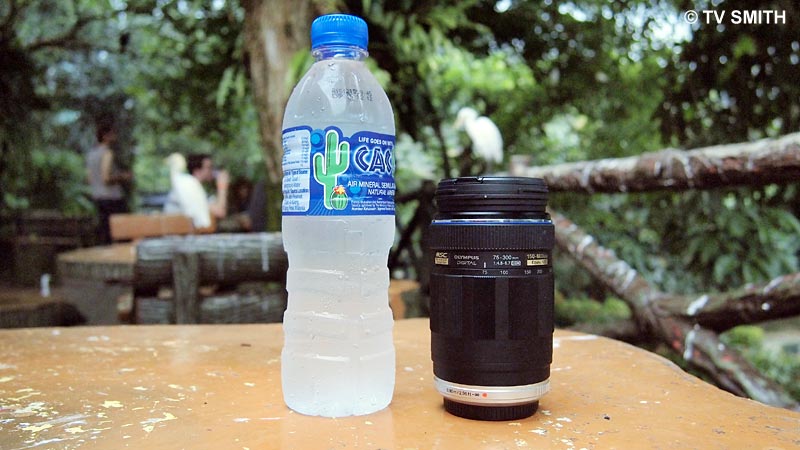
Pocket Rocket. For its reach and quality, the Olympus Micro Four Thirds 75-300mm  (600mm in 35mm equivalent) lens is smaller and lighter than a bottle of mineral water!

See also:
The Art Of Art Filters | Chinatown Temple with E-PL 2 | Dong Zen Flora Fest

Getting There: MyCen Map to The KL Bird Park

Tip: You can view larger versions of the images here, gallery-style. When the page finishes loading, click on any picture. Navigate via the arrows on each side of the frame.