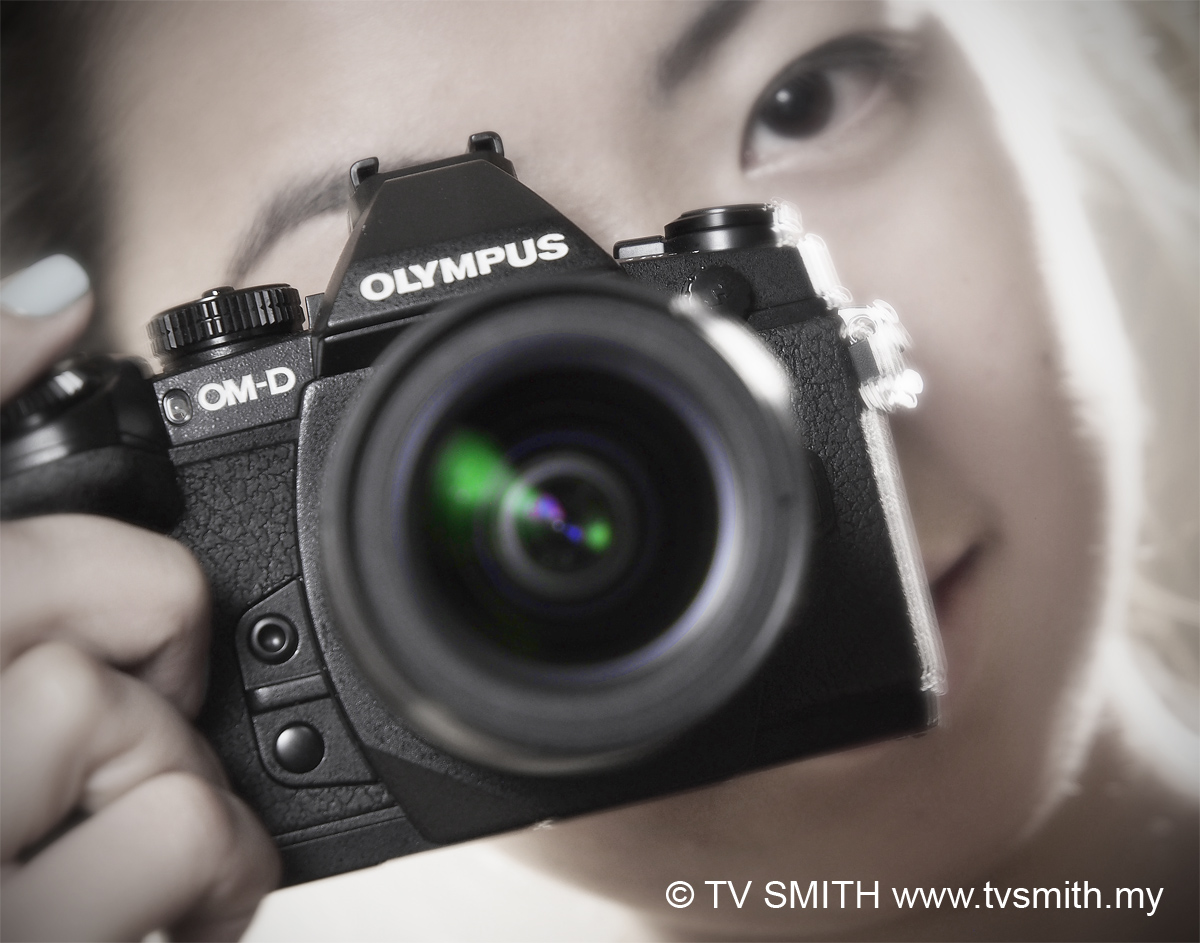
New Olympus OM-D EM-1

Olympus OM-D EM-1

The new OM-D EM-1 is not as big as what everyone speculated initially. Shown here mounted with the 12-50 mm kit lens. Photographed with Olympus OM-D EM-5, ISO 200, f2.8, 1/15 sec.

Today, a new flagship mirrorless system camera from Olympus will debut. The new OM-D EM-1 inherits the classic design of the EM-5 with some distinct improvements. I have had the camera a couple of weeks earlier; and here’s my initial hands-on report in 17 pages.

I have owned and used Olympus system cameras from the E-1 (year 2003), E3, E-520, E-5, through to the E-P1, E-PL2, E-PL5 and my current favourite, the OM-D EM-5. Regular readers here will know, I use the OM-D EM-5 on a daily basis, in almost every conceivable situations and environment. As I write this, my EM-5’s LCD screen has cracked and the mode dial malfunctioning possibly due to the extreme situations I put it through. I hope to put the EM-1 through the same vigorous real world use and will report accordingly.

Follow me on Instagram for daily pics with the OM-D:
http://instagram.com/tvsmithmy

This is not a technical or scientific review. It is more to introduce you to the new features and to share my thoughts as an existing EM-5 user. Here, you will find some new and exclusive pictures of the EM-1 and sample pictures photographed with the EM-1 itself.

Briefly: the camera has a new 16.0 megapixel sensor, new powerful TruePic VII engine, dual AF detection, ultra-large high res VF, improved I.S., time lapse, focus peaking, full Wi-Fi remote control and even a flash PC sync socket. Video specs remains almost the same as the EM-5 with improvements coming from the new processor and better I.S. While that may be understandably disappointing to some, it is nothing to scoff at.

Before we begin, big thanks to Olympus Malaysia and Synergy Consultants for arranging the review camera and lenses. Big thanks also to my camera assistant and model, Carmen Hong, who worked tirelessly through the hectic test drive.

Table of Content
01. Introduction
02. Dual Detection AF
03. Images With 43 and m43 Lenses
04. Color Creator
05. Dramatic Tone Art Filter Samples
06. Auto HDR Shooting Mode
07. Live Bulb and Live Time and New Low ISO
08. 1/8000th Shutter Speed @ 10 frame per second
09. New 12-40 mm f2.8 PRO Lens
10. New 12-40 mm f2.8 Image Samples
11. Image Stabilization Image Sample
12. Wi-Fi Remote Live View and Control
13. Comparison of EM-1 with EM-5
14. Main Features and Price List
15. Main Feature Details
16. Other Features
17. Concept Video, Links to Touch and Try Sessions and Pre-Order Online

See next page on Auto Focus…

New Olympus Pen E-P5

Note: This post on the E-P5 is spread across 3 pages. Click here to jump to Page 2.

Olympus today unveiled its new flagship PEN m43 camera. The PEN E-P5 is shaped after the original popular PEN series film cameras from the 60s and 70s. Under the hood of the latest digital reincarnation is a powerful slew of features. I won’t go into every aspect of its specification. You can see the specs here on Page 3. I will however highlight some of the features I like when I had a hands-on with it a few weeks ago.

The Trio: White, Black and Siver-Black (Not to exact scale)

How is it different from the OM-D (EM-5) then? Is the E-P5 even better than the OM-D? Answer here

Some of the notable features:

1) The Wi-Fi link connects with a QR code displayed on the camera’s LCD screen. This should be quicker and less messy than traditional wireless scanning and password pairing method. You download a free Olympus App to your Android or iOS device and scan the QR code to connect.

Note: For straight forward file transfer and sharing, I think the optional accessory Olympus PenPal PP-1 bluetooth device for Android is still quite viable and fast.

2) Wireless tethering with Live View on your phone. Not only that, you can focus with touch AF and trigger touch shutter release remotely, on the screen of your connected phone or tablet. A very useful feature although I suspect most users will be using it in conjunction with self pics. Beats setting the camera on tripod, clicking on self timer and running into position 🙂 Unfortunately remote Live View is available only in Full Auto mode and not in other exposure modes such as Video.

3) 1/8000 sec mechanical shutter means better opportunities to use a fast lens wide open (if needed) here in bright, tropical Malaysia. But don’t throw away your ND filter just yet.

4) Focus peaking as a focussing aid. Although I don’t use manual lenses much, many were clamouring for it.

5) Time lapse / interval shooting programmable function and auto in-camera assembly of jpgs (ala Nikon D800) into an AVI timelapse sequence (1280 x 720 avi).

6) Body is made from high quality textured metal finishing in one-piece wrap with no screws in sight.

7) Interchangeable body grips (that includes a seemingly odd wooden one which should be popular in Japan and USA). Other Olympus-branded leather accessories like straps and cases will also be available.

Mounted my Body Cap Lens on the E-P5 to appreciate its compactness

8) GPS logging in exif data when paired with a smartphone that has its GPS enabled.

9) OM-D’s already legendary 5-axis stabilization is carried over with refinements.

11) High quality optional VF-4 viewfinder with magnification similar to high-end full frame dSLR. It is relatively expensive though. See Price List here (Page 2).

12) A / B Flip Switch for dual control dials means effectively there are 4 dials (that can be programmed).

13) Battery is similar / backwards compatible with EM-5’s BLN-1.

14) A pop-up flash that I can use to trigger a remote Olympus wireless flash while keeping the hotshoe and port free for other accessories.

15) My wish came true; prime lenses from Olympus will be available in black instead of funny silver.

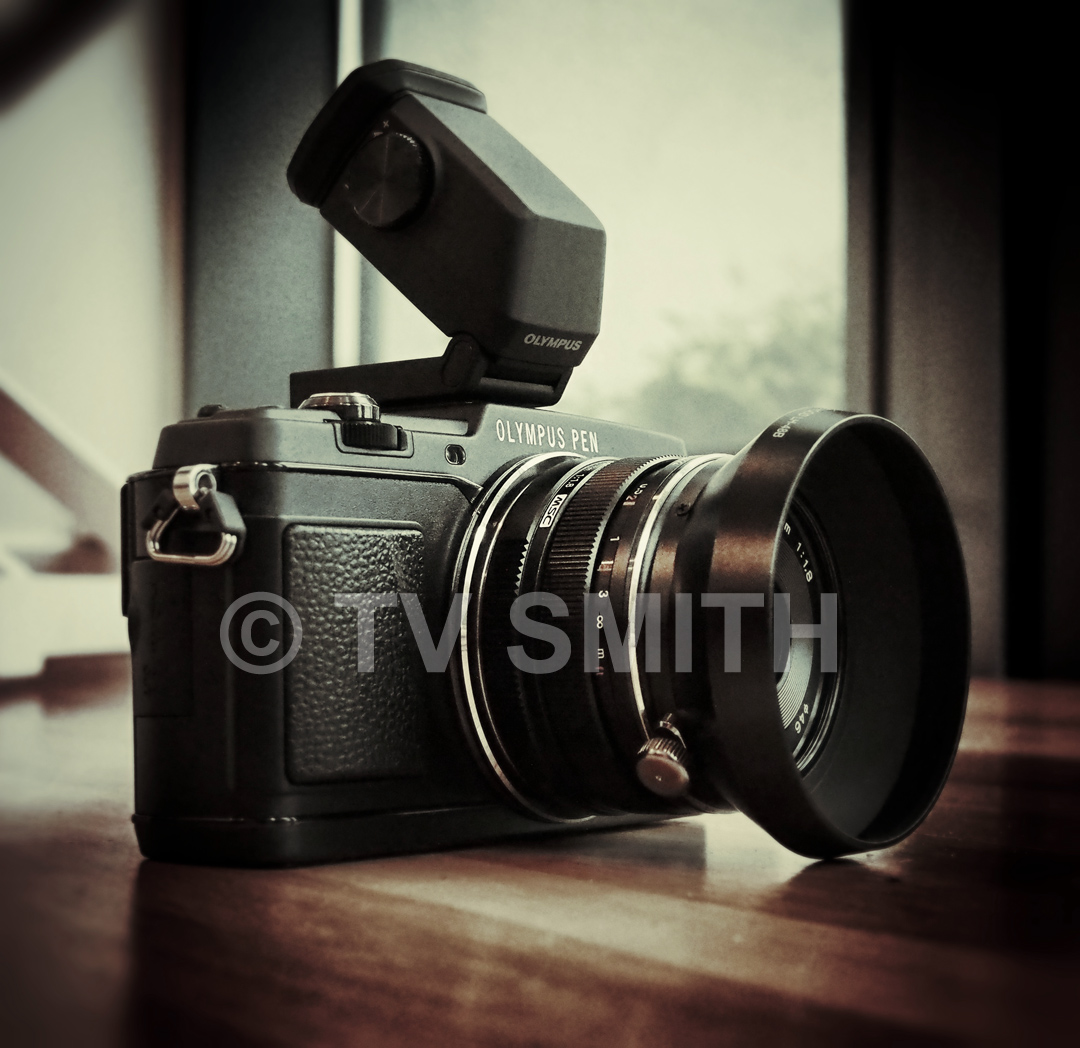
New Olympus E-P5 black with black 17mm and VF4

For Prices and More Pics, continue to Page 2. For Specs, go to Page 3.

Olympus E-P3 Image Samples

Page 1: ISO 200 to ISO 500 | Page 2: ISO 640 to  ISO 12800

As promised, here are some sample images with 100% crops from the new Olympus E-P3 taken across various ISO settings. The camera was in P mode with all settings at factory defaults and firmware version 1.0. The test camera was fitted with the new kit lens. No adjustments were made to the original jpgs in post except resizing/cropping and watermarking. All pictures saved at 70% compression for web…

See also a sample video from the E-P3 & 12mm f2.0 lens here.

Olympus E-P3, ISO 200, f4, 1/100 sec

Olympus E-P3, ISO 200, f4, 1/100 sec

Olympus E-P3, ISO 200, f4, 1/100 sec (100% crop)

Olympus E-P3, ISO 200, f4, 1/100 sec (100% crop)

Olympus E-P3, ISO 200, f5, 1/80 sec

Olympus E-P3, ISO 200, f5, 1/80 sec

Olympus E-P3, ISO 200, f5, 1/80 sec (100% crop)

Olympus E-P3, ISO 200, f5, 1/80 sec (100% crop)

Olympus E-P3, ISO 200, f10, 1/320 sec

Olympus E-P3, ISO 200, f10, 1/320 sec

Olympus E-P3, ISO 200, f10, 1/320 sec (100% crop)

Olympus E-P3, ISO 200, f10, 1/320 sec (100% crop)

Olympus E-P3, ISO 400, f5 1/60 sec

Olympus E-P3, ISO 400, f5 1/60 sec

Olympus E-P3, ISO 400, f5 1/60 sec (100% crop)

Olympus E-P3, ISO 400, f5 1/60 sec (100% crop)

Olympus E-P3, ISO 500, f5.6 1/125 sec

Olympus E-P3, ISO 500, f5.6 1/125 sec

Olympus E-P3, ISO 500, f5.6 1/125 sec (100% crop)

Olympus E-P3, ISO 500, f5.6 1/125 sec (100% crop)

Olympus E-P3, ISO 500, f7.1 1/250 sec

Olympus E-P3, ISO 500, f7.1 1/250 sec

Olympus E-P3, ISO 500, f7.1 1/250 sec (100% crop)

Olympus E-P3, ISO 500, f7.1 1/250 sec (100% crop)

All pictures photographed with the Olympus Pen E-P3 by & © TV Smith

Tip: You can view larger versions of the images here, gallery-style. When the page finishes loading, click on any picture. Navigate via the arrows on each side of the frame.

Continue with Next Page (ISO 640 to ISO 12800)…