Backstage At The Opera

Guess what? Backstage at the Chinese opera is like a typical family outing nowadays. Everyone was busy with their phones and no one was talking or looking at one another. This Taiwanese actor is one of several performers joining the troupe this year. The Hokkien Opera, a fascinating component of the Nine Emperor Gods Festival is underrated and under-appreciated.

Remember what I said about making friends while taking pictures on the street? I met several members of the opera while walking with the parade on the first day. They invited me backstage for an intimate look and an explanation of their roles.

For this portrait in the dim dressing area, I used the Pana-Leica Summilux 25mm f1.4 lens. A Manfrotto ML240 LED Panel was mounted above the OM-D to create the catchlights in the eyes. The fine lens captured some light from the phone screen as well.

Backstage At The Opera

Twirl Of The Dragon

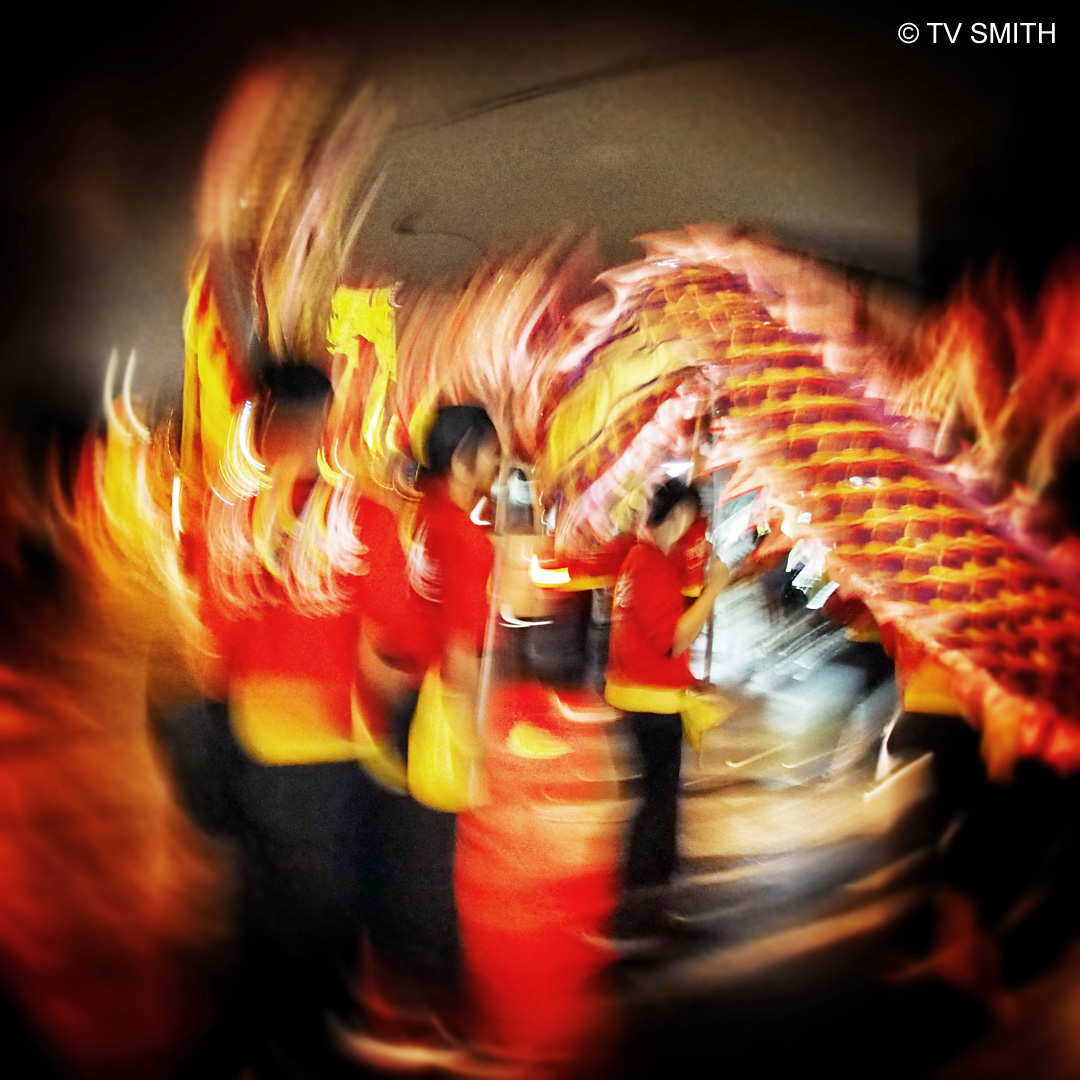
The streets were quite dark during the procession of the Nine Emperor Gods Festival, last night. Only lights were from vehicle headlights and orangey sodium street-lights. Fret not, for it is a good time to experiment. Create dreamy motion blur by using a very slow shutter speed, hand-held. Like the dragon, twirl your wrists in a circular movement as you fire the shutter.
Twirl Of The Dragon

Bang The Drum, Ring The Bell!

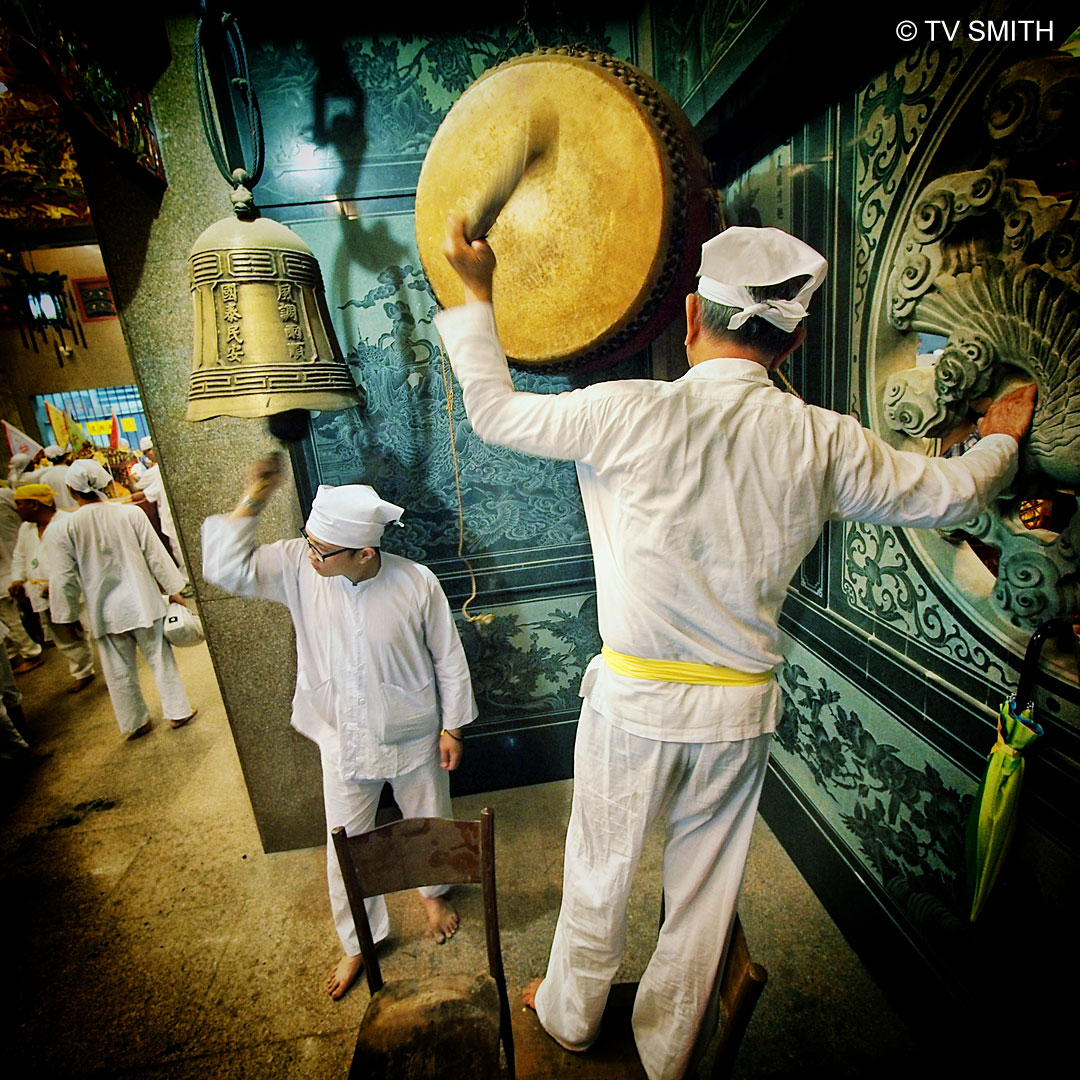
In this seldom-seen view, devotees of the Nine Emperor Gods go through a ceremony inviting the deities for a street procession. The temple was closed to the public during this ritual, earlier tonight.

I set the shutter speed to 1/30th of a second instead of a higher action-stopping speed. This blurred the fast moving hands a bit, capturing the fluidity and rapid movement in the scene.

So far, throughout the Nine Emperor Gods Festival, I have been using only one lens. The excellent Panasonic 7-14mm ultrawide angle lens. As with any ultra-wide angle lens, levelling is tricky due to the converging vertical lines. Usually this isn’t a problem for me but it can be messy when I am forced to crop off-centre later.

To eliminate this potential complication, I set the camera’s ratio to 1:1 (square format) while composing. I am beginning to like it as I don’t need to crop later for Instagram. With much less room for fixing framing error via cropping later, I am forced to get the framing as perfect as possible in-camera.

Try it. Live dangerously.

Bang The Drum, Ring The Bell!