Misty, mystic…
Olympus OM-D, ISO 200, f4, 1/40 sec.
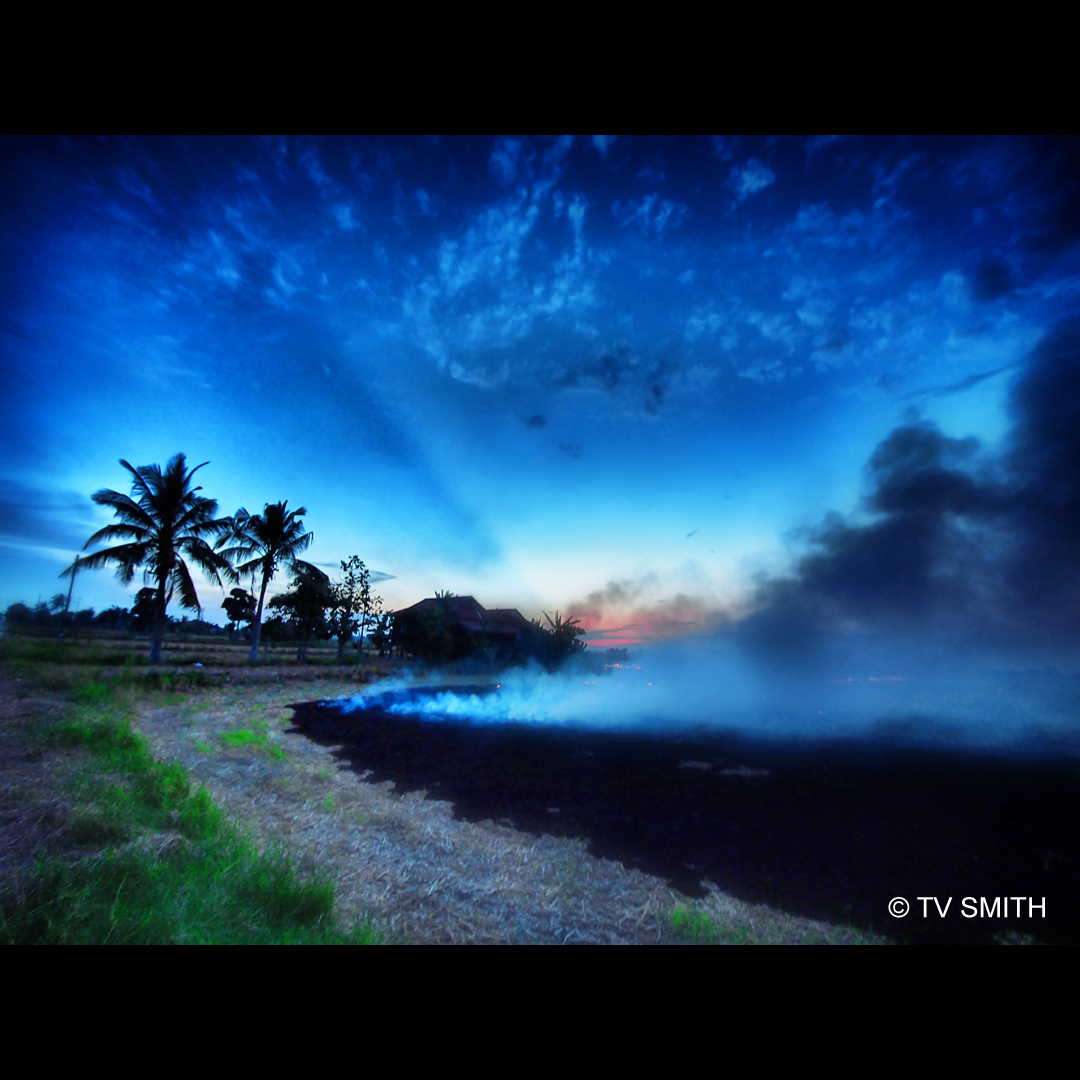
Misty, mystic…
Olympus OM-D, ISO 200, f4, 1/40 sec.
Continuing my journey to the heart of the fire, I finally got as close as I could without scorching the lens. In fact, the heat was so intense I had to back off only after a few seconds. The long walk into the smoky paddy fields under twilight was rewarding. The sunset and flames combined for a rare, beautiful and surreal picture.
I spoke to the farmer involved and he told me he applied selective strip burning in which he burns one ‘keping’ or plot at a time. Unlike large scale land clearing, the fire is isolated, contained and extinguishes quite fast.
It is unfortunate that the rice replanting season coincides with the transboundary haze and the farmers get affected too. As I drove home in the night, I heard on the radio that the Department of Environment announced a ban on open burning.
Olympus OM-D, ISO 200, f7.1, 1/160 sec.
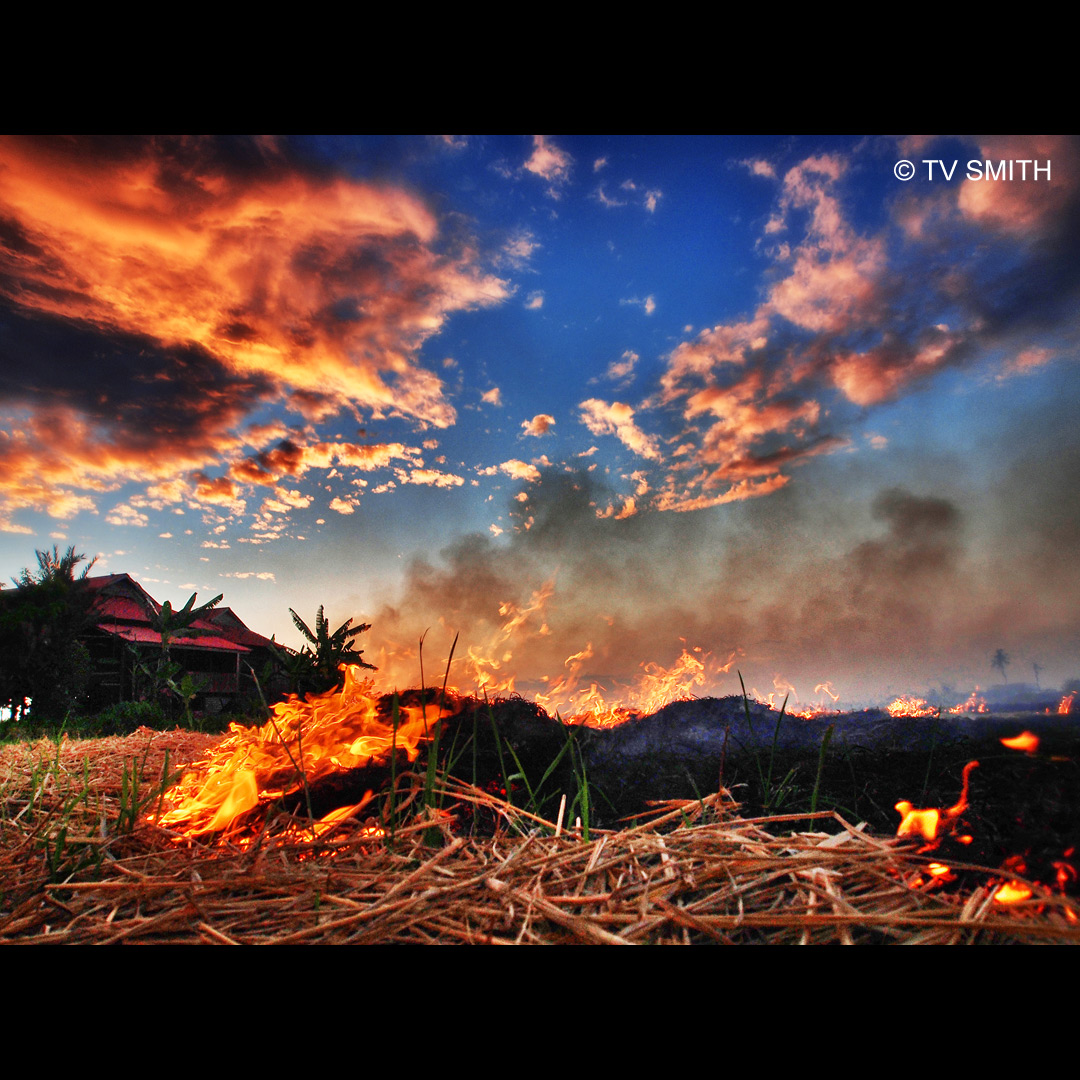
Following harvesting of rice, the paddy stalks are burned by farmers to clear the land for next cultivation. This traditional method is also practised in Thailand, India, China, Taiwan, Japan, USA and many other rice-growing countries.
The open burning has become controversial, especially in South East Asia, where it coincides with massive forest and plantation burning that result in seasonal transboundary haze.
At the epicenter of the burning rice fields in the Sekinchan area, the landscape reminded me of the burning oil fields in Kuwait during the Gulf War. On the ground, it wasn’t as dramatic until the sun got lower on the horizon. Earlier in the day, I spotted smoke plumes rising from different directions but the sky remained blue.
The big blockish building on the horizon is a ‘bird hotel’. Known as swiftlet ranching, the bird nests are collected and exported as a delicacy.
Olympus OM-D, ISO 200, f11, 1/2000 sec.
