Fifth of May

Today is the 5th day in the 5th month of the Chinese calendar. It marks the Duanwu Festival which is celebrated as a public holiday in China and by the far-flung Chinese diaspora.

In Malaysia and Singapore, it is also known in the Fujian dialect as the 5th Month Festival (五月節).

Folklore has it that dissident hero Qu Yuan commited suicide on that day (in year 278 BCE) by drowning. Sympathisers threw rice dumplings into the river so fishes would not eat the poet’s body. The recovery of his body is also thought to be the origin of the Dargon Boat Festival.

In South East Asia, the festival is observed with the giving and eating of triangular glutinous rice dumplings wrapped with bamboo or lotus leaves. Photographed here is the Hokkien ‘bak chang’ which is whiter and its filling includes salted duck egg yolk, mushrooms, heh bee (dried shrimps), dried scallops and chestnuts. The savoury Cantonese ‘chung’ is darker and have more beans. I like the Nyonya version which has minced meat and is spicy. There are also sweet and meatless ‘zongzi’ versions.

Olympus OM-D, ISO 200, f4.5, 1/100 sec with Snapseed Vintage Filter.

Hokkien Bak Chang

Savoury Meat Dumpling

Qingming

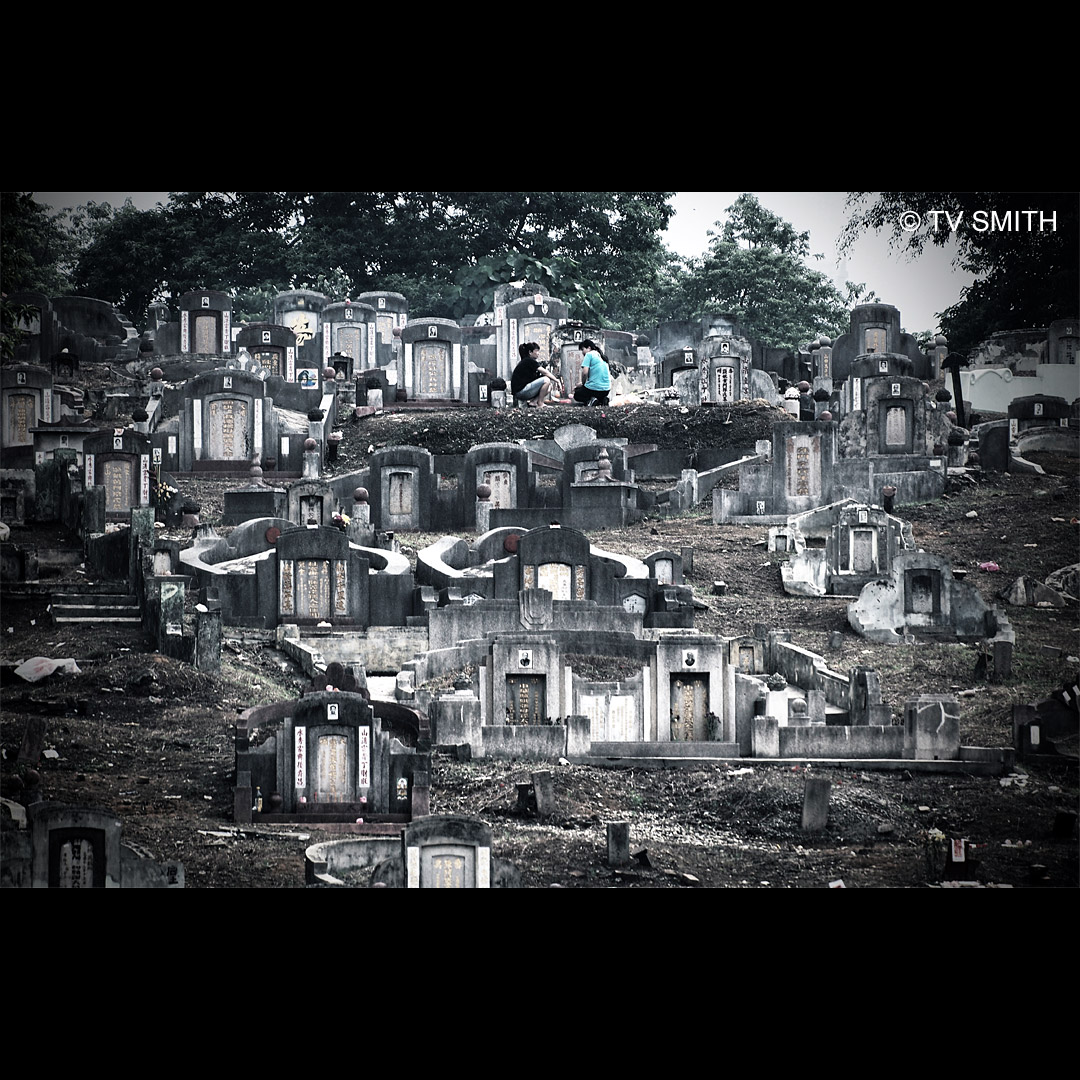
Qingming Festival (called Cheng Beng locally) is Tomb Sweeping Day. The Chinese visit their ancestors’ graves to pay respect and to tidy up the burial site. The name is derived from the Clearness of Spring. Although the actual date is April 4th, most families traditionally make the trip on weekends.

The Kuala Lumpur Kwong Tong Cemetery is one of the largest Chinese cemeteries in the world. Opened in 1895, it spanned 263 acres originally. It is sad to see people leaving behind so many plastic bags. The only litter on a graveyard should be the fallen white petals of the Frangipani trees.

Olympus OM-D, ISO 200, f5.9, 1/640 sec.

Qingming

Pongalo Pongal!

Pongal (also spelled as Ponggol in Malaysia and Singapore) is the Thanksgiving or Harvest Festival celebrated in the southern state of Tamil Nadu in India. Tamil families in Malaysia also place sugar cane stalks and hang sugar cane flowers on their doors during this  mid-January festival.

Pongal refers to the “boiling over” of milk. The overflowing signifies abundance and prosperity. Sugar cane symbolises  sweetness and happiness, I was told. It is only one part of the many rituals and traditions that involve grains, fruits, flowers and milk.

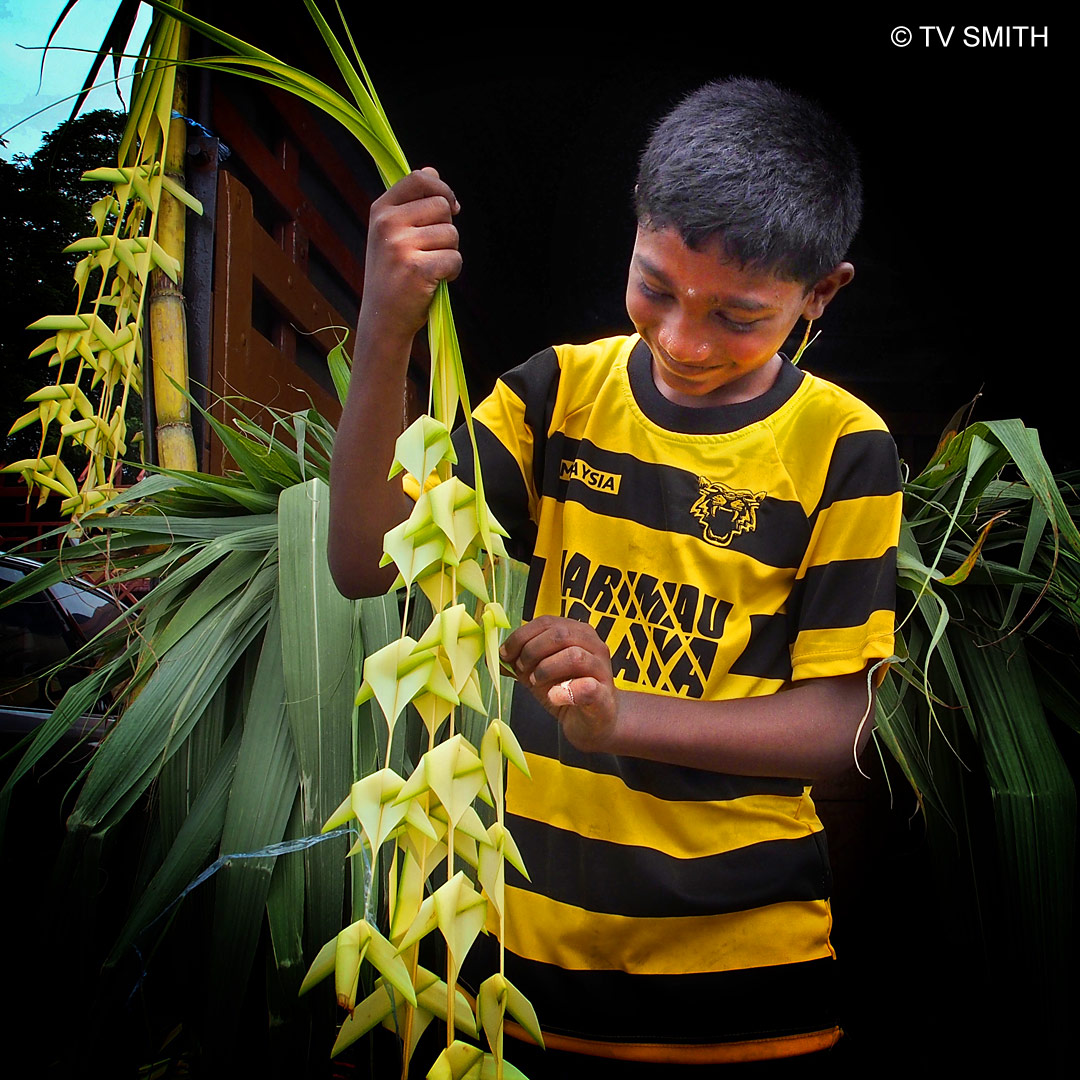
Spotted this makeshift stall off the back of a truck in the Setapak Hot Springs area, earlier today. The owner told me he bought the canes from a plantation in Kapar and is selling them at RM 5 per stalk. His son helps out weaving decorative garlands from the sugar cane flowers.

The four-day festival observed in the Tamil calendar month of “Thai” begins on January 15. Happy Ponggol Festival!

Olympus OM-D, ISO 200, f10, 1/320 sec.

Pongalo Pongal!