Nadeje

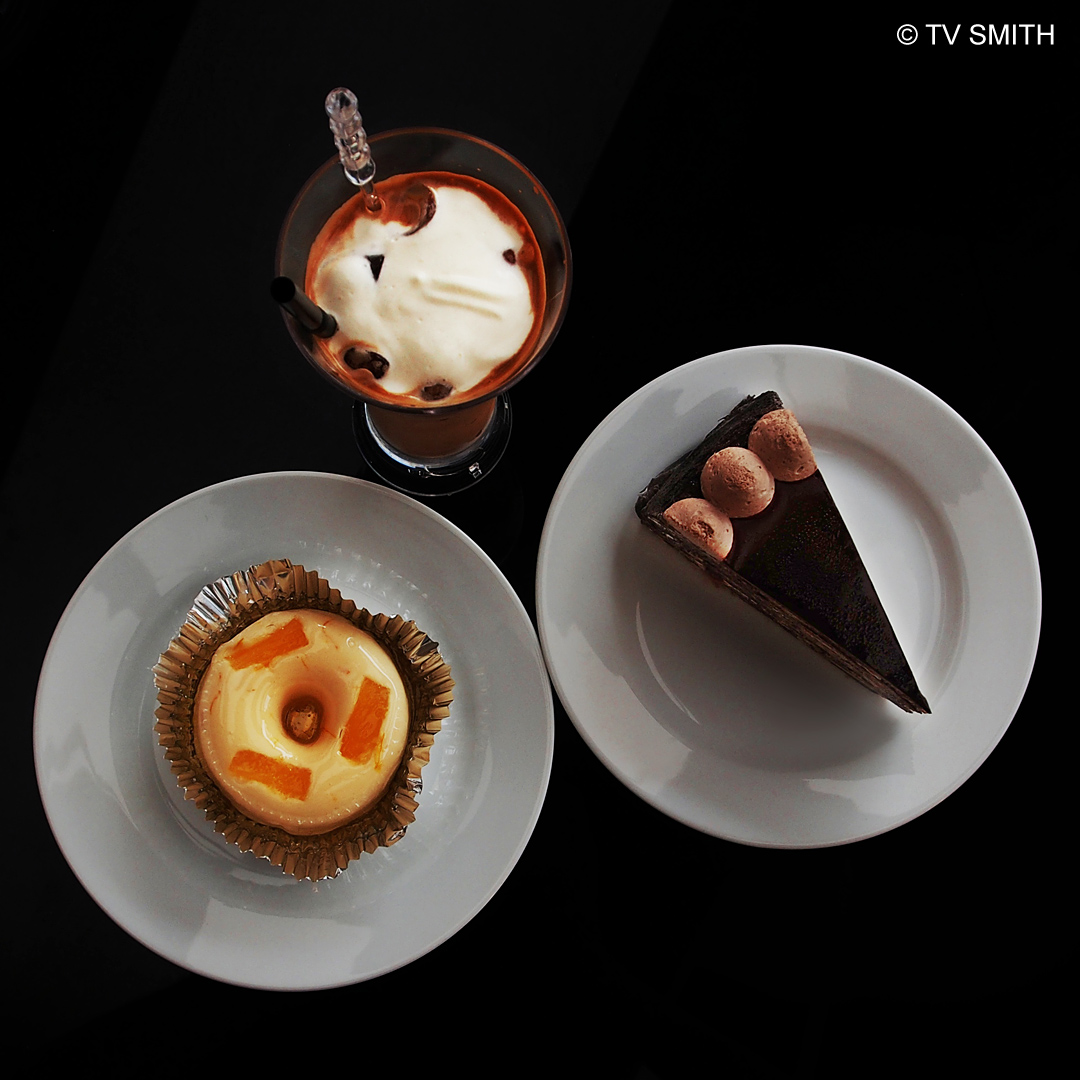
Many like taking food photos from top down. Some prefer a side view. Which is better? Top or bottom?  Depends on the subject but most of the time it is a matter of personal taste.

As you may have noticed, I usually shoot food from an angle lower than 45 degree to near parallel. That way the dish appears more 3-dimensional and you see its texture better. A diagonal angle will appear more natural since it is closer to a seated diner’s POV.

If the layout or presentation is nice, it is worth exploring from the top. Some dishes, table surface or cutlery (when combined) lend itself to an overhead view.

At Nadeje Melaka Mille Crepe’s, the table top was a nice glossy black. The outdoor seating area also had nice diffused sunlight coming in. That allowed a clean and  minimalist look. I framed the picture with the OM-D’s AMOLED screen tilted up.

Photographed here: Nadeje’s Iced Malacca Coffee Latte, Pineapple Donut and Double Choclate Mille Crepe Cake.

Nadeje’s PJ branch is at B-01-01, Dataran 3 Two Square, Jalan 19/1, 46300 Petaling Jaya.

Olympus OM-D, ISO 200, f5, 1/60 sec.
Nadeje Melaka Mille Crepe

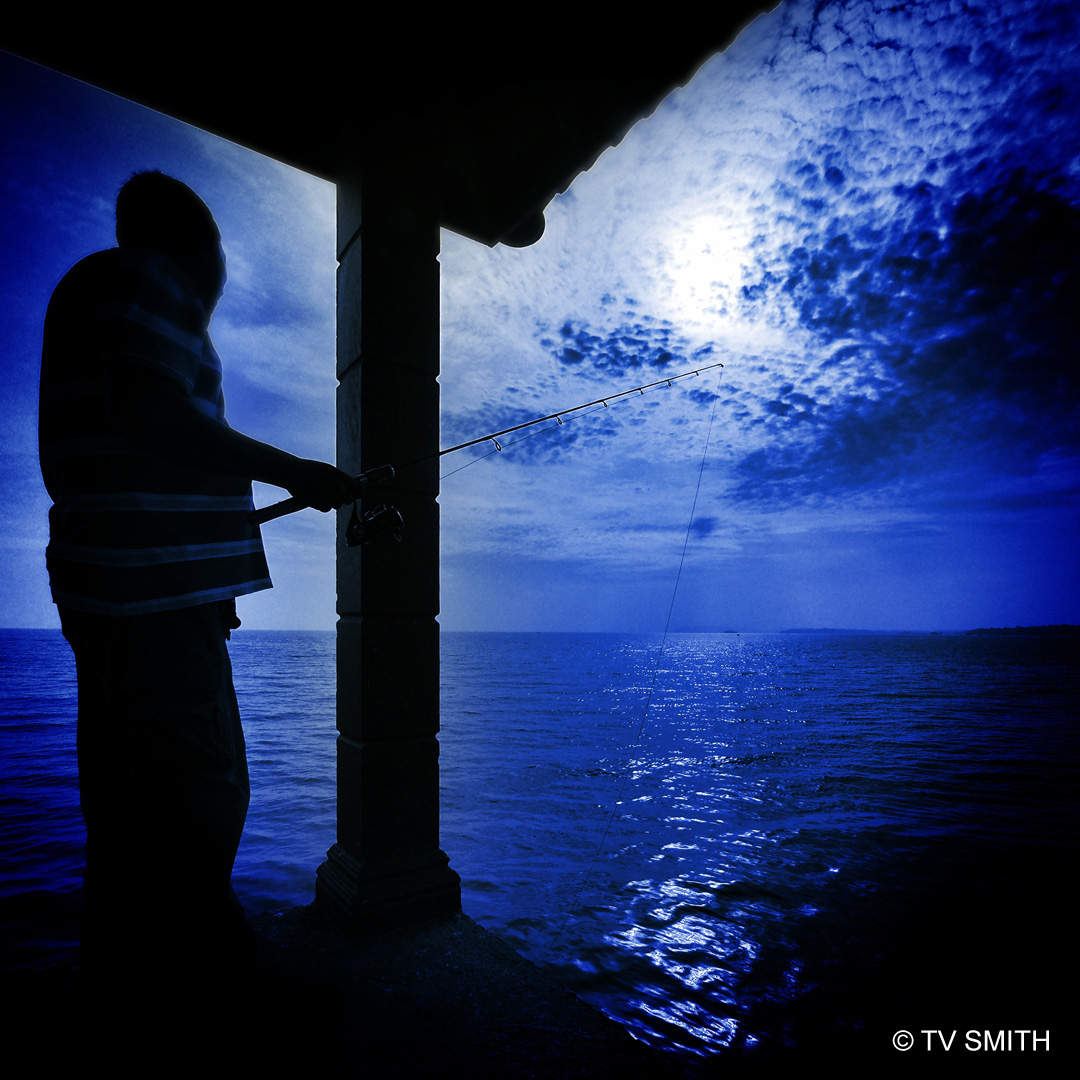
Fishing Under A Full Moon

Moonlight fishing, anyone? Man, those anglers will do anything to get away from their wives…

Hollywood movies have somehow conditioned us to think that moonlight is blue. In reality it is not, of course. The probable reason it is blue is because most night scenes are filmed in the day and blue was added to dilute the saturation.

It is easier to film in the day as real moonlight, even on a full moon, is rarely bright enough for practical use. Plus, you don’t have to pay the cast and crew overtime in some places.

Blue filters are placed over the lens and blue gels over lights, if they are used. With electronic (digital) still or video cameras, the white balance can also be tuned to simulate moonlight. The exposure is also dialled down a bit. It won’t work for every scene or location, however.

It works when there is some highlight such as the shimmering reflections off the sea here. Combine it with some silhouettes, if possible. The clouds in the sky should also look like thin raggy night clouds instead of puffy cumulus clouds. And avoid any unlit street lights or vehicles driving around without lights.

To start experimenting, set your camera’s white balance to indoors (fluorescent or incandescent preset) when you are out in the sun. Some cameras allow you to fine tune the colour temperature which will be even better. Or you can just use a photo editing software afterwards. Whichever method you choose, have fun turning day into night.

Photographed somewhere off the coast of Malacca at 5pm.

Olympus OM-D, ISO 200, f11, 1/800 sec

Moonlight Fishing

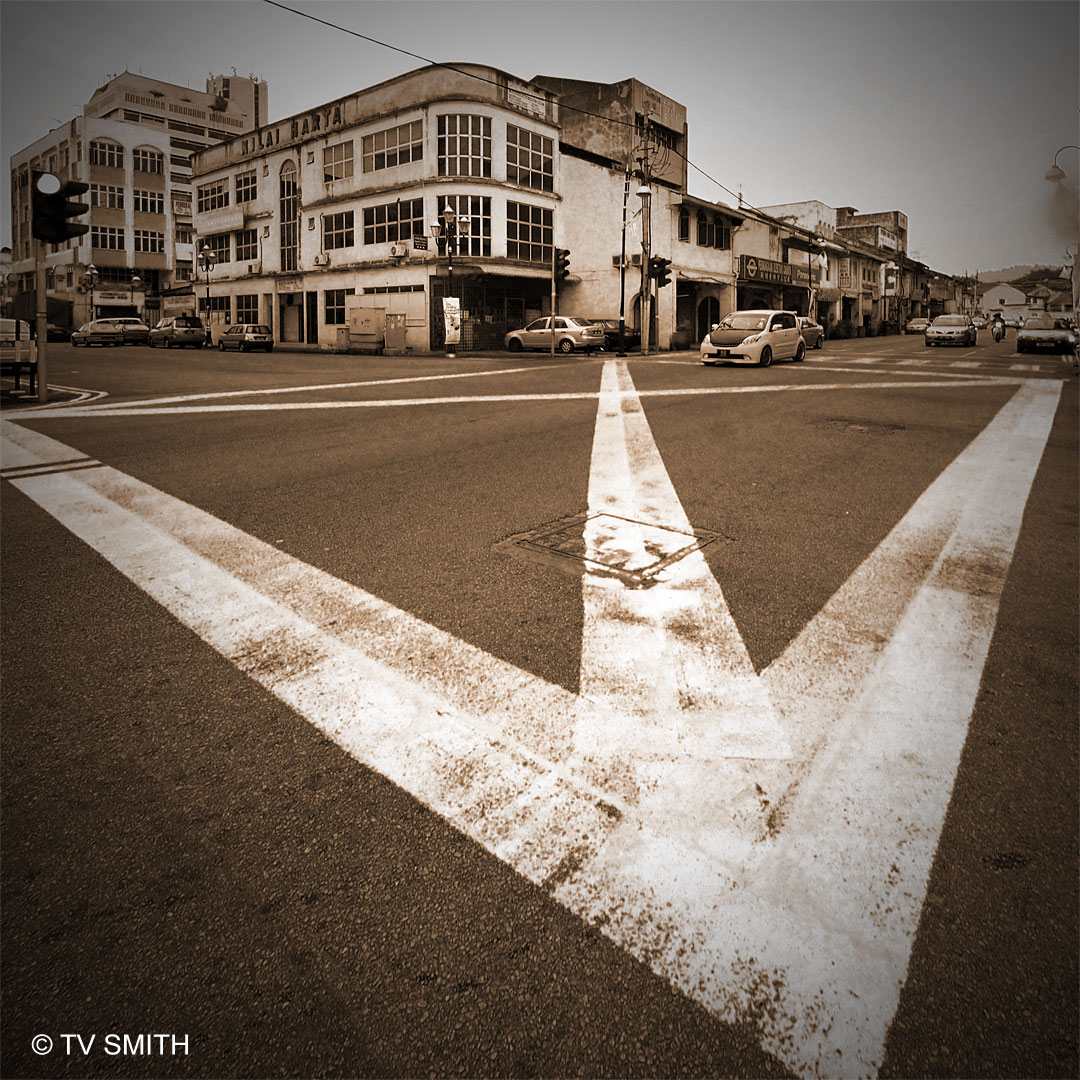
Old Seremban

What do you do when you arrive at a half-deserted small town on a hazy afternoon? You look for compositional elements to liven up your picture.

The yellow box says “No Waiting” but as a photographer you can afford to wait a little. Do not point your camera immediately when you arrive at a location. Walk around and survey with your eyes, not your viewfinder. I saw the lines from across the street and imagined the final capture in my mind.

Charming Seremban town seems to be stuck in a time warp with little new development happening.  Most of the action is now at the newer Seremban 2 and 3, I was told. Sepia toning and vignetting was added to enhance the old world charm.

Olympus OM-D, ISO 200, f10, 1/200 sec.

Old Seremban Town